You’ve got a beautiful brisket seasoned and ready, friends are coming over in a few hours, and your Pit Boss won’t ignite. Or maybe it’s swinging wildly between 180°F and 350°F when you set it to 250°F. That sinking feeling? Almost every Pit Boss owner has been there.
The good news is most Pit Boss pellet grill problems aren’t serious. They’re usually caused by something simple — a dirty fire pot, a tripped sensor, damp pellets, or a loose connection. You don’t need a technician for 90% of these fixes. You just need to know where to look and what to do.
This article walks you through the most common Pit Boss pellet grill troubleshooting scenarios, explains exactly why each problem happens, and gives you step-by-step fixes you can do right in your backyard.
Why Your Pit Boss Won’t Ignite (And How to Fix It)
This is probably the #1 complaint Pit Boss owners have. You turn the dial, hear the fan running, but nothing catches. No smoke, no fire, no heat.
Here’s what’s usually going on.
The fire pot is full of old ash and pellets. After several cooks, unburnt pellet dust and ash accumulate in the fire pot. This pile literally smothers the hot rod (the igniter element sitting at the bottom of the pot). If the hot rod can’t make contact with fresh pellets, there’s nothing to ignite.
The fix is straightforward. Turn off the grill, unplug it, and let it cool down completely. Remove the grill grates, the heat deflector plate, and the drip tray. You’ll see the fire pot sitting in the center of the barrel. Scoop out all the old ash and pellet residue. A shop vac works best for this, but a small scoop and a brush do the job too. You should be cleaning this out every 3-4 cooks at minimum.
The hot rod itself might be burnt out. Hot rods don’t last forever. They typically need replacement every 1-2 years depending on how often you grill. To check if yours is working, plug the grill in and turn it to the SMOKE setting. Wait about 2-3 minutes, then carefully (with a heat-resistant glove) touch the tip of the hot rod. It should be getting hot. If it’s stone cold after several minutes, the hot rod needs replacing. Pit Boss sells replacement hot rods for around $15-20, and swapping one out takes about 10 minutes with a basic socket wrench.
Your pellets might be the problem, not the grill. This one catches a lot of people off guard. Pellets absorb moisture from the air. If your bag has been sitting open in the garage for a few weeks, especially during humid weather, those pellets have soaked up enough water to make them nearly impossible to ignite. Damp pellets also expand and can jam the auger. Always store pellets in a sealed container or a bucket with a lid. If you suspect moisture, dump the hopper completely, run the auger clean, and refill with fresh, dry pellets.
Pro Tip: Before every cook, drop a few pellets from your hopper onto concrete and step on them. Dry pellets snap cleanly. Damp pellets squish and crumble. If they crumble, swap them out.
Temperature Swings and Inaccurate Readings
You set your Pit Boss to 225°F to smoke a brisket at low and slow, but the display keeps bouncing between 190°F and 280°F. Or your food is taking way longer than it should, which tells you the actual temperature is probably lower than what’s showing on screen.
Temperature fluctuations of about 15-20°F in either direction are actually normal for pellet grills. They’re fire-based cookers, not ovens with precise electric elements. But if you’re seeing swings of 50°F or more, something needs attention.
Check the RTD temperature probe. That little metal probe inside the cooking chamber (usually on the left side near the hopper) is what tells the controller how hot it is inside. If it’s coated in grease, smoke residue, or carbon buildup, it sends wrong readings to the control board. Wipe it gently with a soft cloth or a cotton swab dipped in a little vinegar. Don’t use anything abrasive — you’ll damage the sensor.
Ambient weather plays a bigger role than most people realize. If you’re grilling in 35°F weather with a 15 mph wind, your Pit Boss has to work significantly harder to maintain temperature. The thin steel walls of a pellet grill lose heat fast in cold and windy conditions. A welding blanket or a Pit Boss-specific insulated blanket can make a dramatic difference during winter cooks. Also, position your grill so the hopper side faces away from the wind — this reduces cold air getting pulled into the burn pot area.
Your P-Setting might need adjusting. The P-Setting (short for “Pause Setting”) controls how long the auger pauses between feeding pellets on the SMOKE setting. A higher P-Setting means longer pauses, fewer pellets, and lower temperatures. A lower P-Setting means shorter pauses, more pellets, and higher temperatures. If your grill runs too cold on SMOKE, try dropping the P-Setting down. If it runs too hot or you’re getting too much fire and not enough smoke, raise it up. We’ve written a detailed breakdown of how the Pit Boss P-Setting works that explains each number and when to use it.
The quality and type of pellets matter. Not all wood pellets are created equal. Cheaper pellets with lots of filler produce more ash, burn less consistently, and cause more temperature swings. Stick with quality hardwood pellets. Also, different woods burn at slightly different rates — something to keep in mind if you’re deciding between hickory and mesquite for your next cook.
The Auger Jam — What It Is and How to Clear It
The auger is that big metal screw inside the hopper that pushes pellets from the storage bin into the fire pot. When it jams, pellets stop feeding. No pellets reaching the fire means the fire goes out, and your grill temperature drops to nothing mid-cook.
Auger jams happen for a few reasons. Moisture-swollen pellets are the most common culprit. When pellets absorb water, they expand and turn into a sawdust paste that glues itself to the inside of the auger tube. Another cause is pellet dust — the fine sawdust that settles at the bottom of every pellet bag. This dust packs tightly around the auger and hardens over time.
To clear a jam, start by turning off and unplugging the grill. Remove as many pellets from the hopper as you can by hand or with a scoop. Most Pit Boss models have a pellet cleanout door on the back of the hopper — open that and let the remaining pellets pour out into a bucket.
If the auger still won’t turn, you’ll need to access it from the hopper side. Some people use a long wooden dowel to push packed material through. In more stubborn cases, you might need to disconnect the auger motor (usually held by a few bolts) and manually pull or rotate the auger free. Once it’s clear, reassemble everything and run the auger for a few minutes with the lid open to make sure pellets feed smoothly before starting your next cook.
Warning: Never stick your hand into the auger tube while the grill is plugged in. Even if the grill is “off,” an electrical surge or accidental switch-on could engage the auger motor.
Grill Produces Too Much Smoke or Not Enough
Getting that perfect thin blue smoke is the goal for most pitmasters. If your Pit Boss is belching thick white smoke, your food is going to taste bitter and acrid. If there’s barely any smoke at all, you’ll miss out on that flavor you bought a pellet grill for in the first place.
Too much heavy white smoke usually happens at startup or when the fire pot is overloaded with pellets. During startup, some white smoke for the first 5-10 minutes is completely normal — the pellets are just catching and the fire is establishing itself. If it continues beyond that, check whether too many pellets are dumping into the fire pot. A malfunctioning controller or a P-Setting that’s too low can cause this. Also, a dirty grill with lots of grease buildup on the heat deflector and drip tray produces extra smoke that has nothing to do with wood — it’s old grease burning off.
Not enough smoke is a complaint you’ll hear more often from people who previously used offset stick burners. Here’s the reality — pellet grills by design produce less visible smoke than stick burners or charcoal setups. The pellets burn very efficiently, which means cleaner combustion and less smoke. You’ll get the most smoke flavor at lower temperatures (SMOKE setting through about 250°F). Above 300°F, the grill is burning pellets fast and clean, so you’ll see very little smoke.
If you want more smoke flavor, try using the SMOKE setting for the first hour or two of your cook before bumping up the temperature. Cooking at 225°F rather than 275°F also helps — and if you’re curious about how different temperatures affect something like ribs, here’s a look at smoking ribs at 250 vs 275 that breaks it down.
Some Pit Boss owners add a smoke tube — a small perforated metal tube you fill with pellets, light with a torch, and place inside the cooking chamber for extra smoke regardless of what temperature the grill is running.
ErL, ErH, Er1, and Other Error Codes
Your Pit Boss display is showing a code instead of a temperature. Don’t panic. These codes are actually your grill trying to tell you exactly what’s wrong.
ErL (Error Low) means the grill’s temperature has dropped below about 150°F. The fire has probably gone out. This can happen because of a pellet jam, an empty hopper, damp pellets, a burnt-out hot rod, or heavy wind killing the flame. Turn off the grill, clean out the fire pot, make sure pellets are dry and feeding properly, and restart.
ErH (Error High) means the temperature has spiked above 550°F or so. This is a grease fire situation. If you see this code, open the lid immediately to release heat (yes, open it — you want to drop the temperature, not trap more heat), turn off the grill, and disconnect it. Don’t close the lid on a grease fire — that can starve it of oxygen temporarily but cause a dangerous flare-up when you reopen it. Once the grill cools down, do a deep clean. Remove all grease from the drip tray, heat deflector, and bottom of the barrel. Regular cleaning prevents this problem entirely.
Er1 typically points to a bad temperature sensor (RTD probe). The controller isn’t receiving a readable temperature signal. Check the RTD probe’s wiring connection to the control board — a loose or corroded plug is often the cause. If the wiring looks good and the probe appears undamaged, the probe itself may need replacing.
noP (No Probe) shows up on some Pit Boss models when the meat probe isn’t plugged in but the controller is looking for a reading. Either plug in your meat probe or make sure the meat probe feature isn’t accidentally selected on the controller.
Fire Pot Overflowing with Pellets
You open up the grill and find the fire pot stuffed full of unburnt pellets, maybe even pellets spilling over the sides of the pot into the bottom of the barrel. This usually means pellets were being fed but never actually lit.
The most likely cause is a dead hot rod. Pellets keep getting pushed in by the auger, but nothing ignites them, so they just pile up. Follow the hot rod testing steps from the ignition section above.
Another possibility — you had a flameout during a cook (from wind, a pellet jam, or another interruption), and when the grill tried to relight, it kept feeding pellets into an already-full fire pot without success.
Whenever this happens, you absolutely need to clean out the fire pot before attempting to restart. If you try to ignite a pot stuffed with 2-3 cups of pellets, you risk a sudden large flare-up when they all catch at once. Clean it out, start fresh.
Uneven Cooking and Hot Spots
Your steaks on the left side of the grill are getting done way faster than the ones on the right. Or the back of your cooking grate runs 30-40 degrees hotter than the front. Sound familiar?
Pellet grills inherently cook a bit unevenly because the fire pot is on one side (usually the left, near the hopper) and the heat has to travel across the barrel to the other side. The area directly above and near the fire pot runs hotter. Most Pit Boss models use a heat deflector plate to distribute heat, but it’s not perfect.
A few things you can do about this. Rotate your food halfway through the cook, just like you’d rotate a baking sheet in the oven. If you’re doing a long smoke — say a pork shoulder at 275°F — rotating the meat once or twice during the cook is easy enough and makes a noticeable difference.
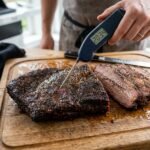
Using a good dual-probe or multi-point thermometer helps you understand your grill’s hot spots. Place probes at different spots on the grate and take notes. Once you know where the hot zones are, you can plan your food placement around them. Knowing how to read a meat thermometer correctly makes a real difference in getting consistent results from your Pit Boss.
Also, make sure the heat deflector plate is seated properly and isn’t warped. A warped plate directs heat unevenly. If yours has seen better days, a replacement is usually under $30.
The Grill Shuts Off Mid-Cook
Few things are more frustrating than checking on a 10-hour brisket smoke and discovering the grill turned itself off three hours ago. Your brisket has been sitting in the danger zone, and your timeline is destroyed.
Mid-cook shutdowns usually tie back to the problems we’ve already covered — a pellet jam that starved the fire, an empty hopper (it happens more than people admit), a tripped ErL code, or a power interruption. But there’s one cause people often overlook: the power cord and outlet.
Pit Boss grills pull relatively little electricity (around 300 watts at startup, dropping to about 50 watts during cooking), but if the cord connection is loose, if the outlet has a tripped GFCI, or if you’re running the grill through a long, thin extension cord, you can get intermittent power drops that shut the controller down. Use a heavy-duty outdoor-rated extension cord if you need one, and check that the outlet’s GFCI hasn’t tripped.
For long cooks like brisket, it’s smart to set a wireless thermometer alarm that alerts your phone if the grill temperature drops below a certain point. This gives you a chance to catch the problem and restart before your meat spends too long without heat. Speaking of brisket, if you’re in the middle of a long smoke and wondering about your target, here’s a detailed guide on when to pull your brisket at exactly the right time.
Maintenance That Prevents Most Problems
Here’s an honest truth that a lot of troubleshooting guides dance around — probably 80% of Pit Boss problems come from not cleaning and maintaining the grill regularly. These are mechanical devices running on fire, wood, grease, and outdoor exposure. They need some love.
After every 2-3 cooks: Vacuum out the fire pot. Scrape the grill grates. Wipe down the drip tray and heat deflector. Empty the grease bucket.
Once a month (if you cook regularly): Deep clean the entire cooking chamber. Remove all internal parts and wipe or scrape the barrel walls. Check the RTD probe for buildup. Inspect the hot rod. Run the auger empty to clear any pellet dust.
Every 6-12 months: Inspect wiring connections. Check the auger for wear. Examine gaskets and seals. Look at the chimney cap for creosote buildup. Apply food-safe high-heat paint to any rust spots on the exterior.
Pellet management: Always empty the hopper if you won’t use the grill for more than a week, especially in humid climates. Store pellets in airtight containers. Never leave pellets sitting in the hopper during rain or overnight dew without a grill cover.
Did You Know? Most Pit Boss warranty claims get denied because the issue was traced back to lack of basic maintenance. Keeping your grill clean isn’t just about performance — it protects your warranty too.
FAQ
Why does my Pit Boss keep saying ErL?
ErL means the internal temperature dropped below roughly 150°F, which usually indicates the fire went out. The most common causes are a jammed auger, wet pellets, an empty hopper, or a failed hot rod. Turn the grill off, clean out the fire pot completely, make sure your pellets are dry, check that the auger feeds smoothly, and restart. If ErL keeps appearing after all that, test the hot rod to see if it’s heating up — a dead hot rod can’t relight pellets if the flame dies.
How often should I replace the hot rod in my Pit Boss?
Most Pit Boss hot rods last between 1-2 years with regular use. If you grill every weekend, you’ll probably need a new one closer to the one-year mark. If you only grill occasionally, it could last longer. You’ll know it’s time when the grill consistently fails to ignite even with a clean fire pot and dry pellets. Replacement hot rods cost around $15-20 and are one of the easiest parts to swap yourself.
Can I use my Pit Boss pellet grill in the rain?
You can, but you should take precautions. Moisture is the enemy of pellet grills in every way — it ruins pellets, accelerates rust, and can cause electrical issues with the controller. If you need to cook in rain, use a canopy or patio cover. Never leave the hopper lid open during rain. And always use a quality grill cover when the Pit Boss isn’t in use. If rain does get into the hopper, empty it completely and let the hopper and auger tube dry out before adding fresh pellets.
What’s the best temperature to season a new Pit Boss grill?
Pit Boss recommends a burn-in process at 350°F for about 30-45 minutes on a new grill. This cures the interior paint, burns off any manufacturing oils, and primes the fire pot. After the initial burn-in, you can increase to 400°F for another 15-20 minutes. Let it cool down, and your grill is ready for its first real cook. Don’t skip this step — food cooked on an unseasoned grill can taste metallic and off.
My Pit Boss is flaking black stuff onto my food. What is that?
That’s built-up carbon and grease residue peeling off the inside of the lid and cooking chamber. It’s not paint (this is a common worry). It’s the natural result of smoke, grease vapor, and heat creating a carbon layer over time. While it’s not harmful, nobody wants black flakes on their pulled pork. The fix is simple: scrape the inside of the lid and barrel walls with a plastic or wooden scraper, then wipe with a damp cloth. Doing this once a month prevents the buildup from getting heavy enough to flake.
Keep Your Pit Boss Running Like It Should
Most Pit Boss pellet grill issues come down to three things — cleanliness, pellet quality, and a handful of replaceable parts. You don’t need an engineering degree. You need a shop vac, dry pellets, a spare hot rod on the shelf, and the habit of spending five minutes cleaning up after each cook.
If you’ve gone through everything in this guide and your grill still isn’t cooperating, contact Pit Boss customer support with your model number and serial number ready. They’re known for being pretty responsive, and if your grill is still under warranty (typically 5 years on the main body), they’ll send replacement parts at no cost.
The best troubleshooting, though, is the kind you never have to do — because you stayed ahead of it with regular maintenance. Your Pit Boss is a solid machine. Treat it right, and it’ll pay you back with years of incredible cooks.