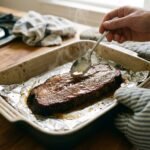
A 25-degree difference doesn’t sound like much — until you’re standing in front of your smoker four hours in, wondering why your ribs still feel tough. That tiny gap between 250°F and 275°F can change your total cook time by over an hour, shift the texture from fall-off-the-bone to competition-style bite-through, and honestly, make or break your weekend cookout.
If you’ve been Googling how long to smoke ribs at 250 and 275, you’re probably looking for a straight answer with real numbers. Not vague “it depends” advice. You want to set your smoker, know roughly when to check, and pull off ribs that make people go quiet because their mouths are too full to talk.
That’s exactly what we’re covering here — specific times for different rib types at both temperatures, the 3-2-1 and 2-2-1 methods, what actually changes between those 25 degrees, and every practical detail you need to get this right on your first try.
Why Temperature Matters More Than You Think
Here’s something a lot of beginners miss: smoking ribs isn’t just about “low and slow.” It’s about controlled collagen breakdown. Ribs have a lot of connective tissue — collagen, specifically — and that stuff doesn’t break down into soft, juicy gelatin until it hits around 190–205°F internally and stays there long enough.
At 250°F, that breakdown happens gradually. The meat spends more time in the rendering zone, which means more fat melts slowly into the muscle fibers. You get a juicier, more tender rib — but you wait longer.
At 275°F, the process speeds up. Collagen still breaks down, fat still renders, but the window is tighter. You shave off meaningful time, though you lose a tiny bit of that deep, slow-rendered tenderness.
Neither temperature is “wrong.” They just give you slightly different results, and knowing what to expect at each one puts you in control.
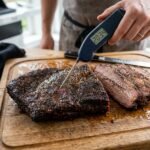
Pro Tip: Your smoker’s actual temperature can swing 10–15 degrees from what the dial says. Use a reliable probe thermometer to track your real cooking temp. If you’re unsure how to read a meat thermometer properly, get that sorted before your cook — it makes all the difference.
How Long To Smoke Ribs At 250°F
Let’s break this down by rib type, because a rack of baby backs and a rack of spare ribs are very different animals — well, the same animal, but different cuts with different thicknesses and fat content.
Baby Back Ribs At 250°F
Baby backs come from higher up on the pig’s back, closer to the spine. They’re leaner, smaller, and more tender than spare ribs. Because they’re thinner, they don’t need as long.
Total time: 4.5 to 5.5 hours
Using the popular 3-2-1 method (which we’ll explain below), baby backs can actually overcook. Most pitmasters adjust to a 2-2-1 method for baby backs at 250°F — 2 hours smoke, 2 hours wrapped, 1 hour unwrapped with sauce.
You’ll know they’re done when the meat has pulled back about a quarter inch from the bone ends and the rack flexes easily when you pick it up with tongs from the middle. Internal temperature should read around 195–203°F between the bones.
Spare Ribs At 250°F
Spare ribs come from the belly side. They’re bigger, fattier, and have more connective tissue. That extra fat and collagen is exactly why they need more time — and why they taste so incredibly rich when done right.
Total time: 5.5 to 6.5 hours
The full 3-2-1 method works perfectly for spare ribs at 250°F. Three hours of open smoke gives them time to build a gorgeous bark. Two hours wrapped lets all that collagen melt. And that final hour sets the glaze and firms up the exterior.
If you’ve ever wondered how many ribs come in a standard rack, spare ribs typically give you 11–13 bones per rack — good to know for planning portions.
St. Louis Style Ribs At 250°F
St. Louis style ribs are just spare ribs with the cartilage tips and flap trimmed off. They cook almost identically to untrimmed spares, sometimes a touch faster because the rack is more uniform in thickness.
Total time: 5 to 6 hours
The trimming makes them cook more evenly, which is why competition teams love them. Same 3-2-1 approach works, though some people find they’re done closer to the 5.5-hour mark.
How Long To Smoke Ribs At 275°F
Bumping up to 275°F doesn’t just save you 30 minutes. It changes the dynamics of the cook in a few important ways. The bark forms faster, the wrap phase is shorter, and you need to be more attentive during that final stretch because things can go from perfect to overdone quicker.
Baby Back Ribs At 275°F
Total time: 3.5 to 4.5 hours
At 275°F, baby backs move fast. The 2-1.5-0.5 method works well here — 2 hours smoke, 1.5 hours wrapped, and about 30 minutes unwrapped to set the bark. Some people skip the final unwrapped stage entirely and just pull them straight from the wrap if the texture is where they want it.
Because baby backs are lean, that higher heat can dry them out if you’re not careful. Spritzing with apple juice or apple cider vinegar every 45 minutes during the initial smoke phase helps keep moisture in.
Spare Ribs At 275°F
Total time: 4.5 to 5.5 hours
Spare ribs handle 275°F better than baby backs because they have more fat to protect them. The 3-2-1 method gets adjusted to roughly 2.5-1.5-1 at this temperature. That said, these aren’t hard rules — they’re starting points. Your ribs, your smoker, and your weather conditions all play a role.
For a detailed comparison of what each temperature does to your ribs, check out this side-by-side breakdown of smoking ribs at 250 vs 275.
St. Louis Style Ribs At 275°F
Total time: 4 to 5 hours
Same adjusted method as spare ribs. St. Louis cuts tend to finish a little sooner because of the more uniform shape. Watch the bend test carefully after hour 4.
The 3-2-1 Method Explained (And When To Modify It)
You’ve probably seen “3-2-1 ribs” mentioned everywhere. Here’s what it actually means and why it’s not a universal rule.
Phase 1 — Smoke (3 hours at 250°F, 2–2.5 hours at 275°F): Ribs go on the smoker unwrapped, bone side down. This is where smoke flavor penetrates the meat and the bark starts forming. Your choice of wood matters here — hickory and mesquite both work for ribs, but hickory gives a milder, more traditional flavor while mesquite runs hotter and more intense.
Phase 2 — Wrap (2 hours at 250°F, 1.5 hours at 275°F): You wrap the ribs in foil or butcher paper with a little liquid — apple juice, butter, brown sugar, honey, or a mix. This creates steam that breaks down connective tissue fast. The ribs basically braise inside the wrap. If you’re debating between foil and paper, here’s a good comparison of butcher paper vs parchment paper for smoking.
Phase 3 — Unwrap and Glaze (1 hour at 250°F, 30–45 min at 275°F): Unwrap the ribs, brush on your sauce, and let them finish on the smoker. The sauce caramelizes, the bark re-firms, and the exterior gets that sticky, slightly crispy texture that makes smoked ribs addictive.
Here’s the thing: 3-2-1 was designed for spare ribs at 225°F. At 250°F, it still works for spares but will overcook baby backs. At 275°F, it’ll turn any rib into mush if you follow it exactly. Always adjust based on your temperature and rib type.
Quick Reference:
- Spare ribs at 250°F: 3-2-1 works great
- Baby backs at 250°F: Use 2-2-1
- Spare ribs at 275°F: Try 2.5-1.5-1
- Baby backs at 275°F: Go with 2-1.5-0.5
Bone Side Up Or Down? It Actually Matters
This is one of those debates that never dies in BBQ circles. Should you place your ribs bone side up or bone side down on the smoker?
The short answer: bone side down for most smokers — especially if your heat source is below the grates. The bones act like a heat shield, protecting the meat from direct heat and preventing the bottom from drying out or charring.
There are exceptions, though, and the reasoning behind each approach goes deeper than most people realize. If you want the full breakdown, this guide on whether to smoke ribs bone up or down covers every angle.
How To Tell When Ribs Are Actually Done
Internal temperature is important, but it’s not the only indicator — and honestly, it’s tricky with ribs because the meat is thin and you can easily hit bone with your probe and get a wrong reading.
Here are the three tests experienced pitmasters rely on:
The Bend Test: Pick up the rack from the center with tongs. If it bends easily and the surface cracks slightly but doesn’t fall apart, they’re done. If it’s stiff, keep cooking. If the meat falls off the bone completely, you’ve gone too far (unless that’s your preference — no judgment).
The Toothpick Test: Slide a toothpick or probe between two bones. It should go in and out with almost no resistance — like poking room-temperature butter. If you feel tightness, give them more time.
The Pullback Test: Look at the bone ends. The meat should have shrunk back about ¼ to ½ inch, exposing the bone tips. This happens naturally as collagen breaks down and the meat contracts.
Target internal temperature: 195–205°F between the bones, away from any bone contact. If you’re hitting 190°F and the bend test looks good, you’re safe to pull them.
What About The Stall?
Yes, ribs can stall — though not as dramatically as a big brisket or pork shoulder. If you’re smoking unwrapped, you might notice the internal temp hovering around 150–170°F and seemingly refusing to climb. That’s evaporative cooling doing its thing, the same physics that make you feel cold when you step out of a swimming pool.
At 250°F, the stall can last 30–60 minutes on a thick rack of spare ribs. At 275°F, it’s shorter — sometimes only 15–20 minutes — because the higher ambient heat overcomes the cooling effect faster.
This is also why the wrapping phase works so well. Wrapping traps moisture, stops evaporation, and basically eliminates the stall. If you’ve ever smoked a brisket at 225 or dealt with the brisket wrap temperature, you’ve already seen this principle in action. Same science, smaller cut.
Practical Tips That Actually Help
Don’t open the lid every 20 minutes. Every time you open the smoker, you drop the cooking temperature by 20–30 degrees and add 10–15 minutes to your total cook time. Check once an hour at most during the unwrapped phase.
Remove the membrane. That thin, papery layer on the bone side of the rack? Peel it off before you season. It doesn’t render down, it blocks smoke and rub from penetrating, and it turns into a chewy, rubbery sheet that makes ribs harder to eat. Grab a corner with a paper towel and pull firmly — it should come off in one piece.
Let your ribs come to room temp. Pull them from the fridge 30–45 minutes before they hit the smoker. Cold meat straight from the fridge creates more condensation, which gives you a sour, ashtray-like smoke flavor instead of that clean, sweet smokiness you want.
Rest your ribs. After pulling them off the smoker, loosely tent them with foil and let them sit for 10–15 minutes. The juices redistribute, the temperature evens out, and the bark sets up better. This small step makes a noticeable difference.
Don’t boil your ribs first. Some old-school recipes tell you to boil ribs before smoking them. This strips out flavor, washes away fat, and turns the texture mushy. If you’ve been told to do this and aren’t sure, here’s why you should skip boiling ribs.
250 Or 275 — Which Should You Actually Pick?
This depends on your priorities. There’s no universally “right” answer, but here’s how to think about it.
Choose 250°F when you have plenty of time, you want maximum tenderness, you’re cooking spare ribs or St. Louis cuts with lots of connective tissue, or you just prefer that ultra-slow approach where the fat renders as deeply as possible. Weekend cooks with no time pressure? 250°F is your friend.
Choose 275°F when you want great ribs a little faster, you’re cooking baby backs that don’t need as much rendering time, the weather is cold or windy (higher temp compensates for heat loss), or you prefer a slightly firmer bite with a crispier bark. Weeknight dinner ambitions? 275°F gets you there.
Both temperatures fall within the ideal low-and-slow range. You’re not rushing at 275°F and you’re not wasting time at 250°F. Pick what fits your schedule and your preferences.
Wood Selection Makes A Bigger Difference Than Temperature
Here’s something most articles skim over: the wood you use flavors your ribs more noticeably than a 25-degree temp change. Pork loves fruit woods — apple and cherry are both excellent, giving a mild sweetness that complements the meat without overpowering it.
Hickory is the classic choice and gives a stronger, nuttier smoke flavor. It pairs beautifully with spare ribs and a sweet/tangy sauce. Mesquite is the most intense option and can turn bitter if you use too much — stick to mixing it with a milder wood if you go that route.
Oak is a solid middle ground. Clean, medium smoke flavor, burns consistently. A lot of Texas-style pitmasters use post oak for everything, ribs included.
Did You Know? The color of your smoke matters more than the amount. Thin, blue-white smoke means clean combustion and good flavor. Thick, white billowing smoke means your wood is smoldering, not burning properly — and that gives your ribs an acrid, bitter taste. Adjust your airflow if you see heavy white smoke.
FAQ
Can you smoke ribs at 250 without wrapping them?
Absolutely. Wrapping speeds things up and guarantees tenderness, but unwrapped ribs give you a thicker, crunchier bark and a smokier flavor overall. If you skip the wrap at 250°F, expect baby backs to take 5–6 hours and spare ribs to take 6–7 hours. Spritz every 45 minutes to keep the surface moist.
Is 275 too hot for smoking ribs?
Not at all. 275°F is still well within the low-and-slow range. Competition teams regularly smoke between 275–300°F. The key is adjusting your timing. You can’t use the same schedule as a 225°F cook and expect identical results — but 275°F produces excellent ribs with a great bark and slightly shorter cook time.
How do I know my ribs are overcooked?
Overcooked ribs fall apart completely when you try to pick them up. The meat slides off the bone with zero resistance, the texture becomes mushy, and the bark turns soft and wet. Some people actually prefer this super-tender style, but traditional BBQ aims for a “bite-through” texture — where you can bite cleanly through the meat and it pulls away from the bone neatly.
What’s the best internal temp for smoked ribs?
Aim for 195–205°F between the bones. Probe in the thickest part of the meat, making sure you’re not touching bone (bone reads hotter and gives false readings). Most racks hit their sweet spot around 200–203°F. Combine the thermometer reading with the bend and toothpick tests for the most accurate judgment.
Should I spritz my ribs while smoking?
Spritzing helps in two ways: it keeps the surface moist (which helps smoke adhere better) and it can add subtle flavor. Apple juice, apple cider vinegar, or a 50/50 mix of both are the most popular choices. Start spritzing after the first 90 minutes — before that, you want the surface dry enough for the bark to start forming.
Your Next Cookout Starts Here
Smoking ribs isn’t complicated once you understand the relationship between temperature, time, and what’s happening inside the meat. At 250°F, you get deeper rendering, more tenderness, and a slightly longer cook. At 275°F, you save time, get a crisper bark, and still end up with ribs that’ll have your neighbors finding excuses to come over.
Start with the adjusted time ranges and methods in this guide, but always let the ribs tell you when they’re done. No two racks cook identically. Your smoker, your weather, the size of the rack, and even how much rub you applied all affect timing. Use a thermometer, trust the bend test, and don’t rush the rest period.
Set your smoker, grab something cold to drink, and give the process the time it needs. The reward is always worth the wait.