Almost 75% of home cooks overcook their steak. Not because they don’t care — they just don’t know the right temperature to pull it off the heat. And honestly, that’s the only difference between a juicy, restaurant-quality steak and a dry, disappointing one sitting on your plate.
Here’s the thing. Steak doneness isn’t about guessing. It’s not about pressing your steak with your thumb and comparing it to the base of your palm (we’ll talk about why that trick doesn’t really work). It’s about knowing your target internal temperature, understanding how long your steak needs on heat, and — this is the part most people skip — factoring in carryover cooking.
Whether you prefer your steak rare with a cool red center or you like it well done all the way through, this guide breaks down every doneness level with exact temperatures, cooking times, and the little details that actually make a difference. No fluff. Just what you need to cook a steak you’ll be genuinely proud of.
What Does “Steak Doneness” Actually Mean?
Before we get into specific numbers, let’s talk about what’s really happening inside your steak as it cooks.
Steak doneness describes the internal temperature of the meat at its thickest point. That temperature determines the color, texture, moisture level, and flavor of your steak. As the inside of the steak heats up, the proteins (mainly myosin and actin) start to denature — they tighten, squeeze out moisture, and change the texture from soft and yielding to firm and chewy.
Think of it like wringing out a towel. The more you heat the proteins, the more moisture they push out. That’s exactly why a rare steak feels juicy and buttery, while a well-done steak feels drier and firmer. Neither is “wrong” — it’s personal preference. But understanding this process helps you control the result.
And that pink or red color inside? It’s not blood. It’s myoglobin, a protein that stores oxygen in muscle tissue. Myoglobin changes color as it heats up — from purplish-red (raw) to bright pink (medium) to gray-brown (well done). So the color inside your steak is basically a visual map of its temperature.
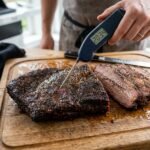
Pro Tip: Always measure doneness with an instant-read meat thermometer inserted into the thickest part of the steak, away from bone or fat. If you’re not sure how to read a meat thermometer properly, it’s worth learning — it’ll change your cooking game overnight.
The Complete Steak Doneness Breakdown
Let’s go through each doneness level one by one. For every level, I’ll give you the pull temperature (when to take it off heat), the final resting temperature (what it reaches after resting), what it looks and feels like, and approximately how long it takes to cook.
All times below are based on a 1-inch thick steak cooked on a hot grill or cast-iron skillet at roughly 450°F–500°F surface temperature. Thicker steaks will naturally take longer, and we’ll cover that adjustment later.
Blue Rare (Bleu)
Pull temp: 105°F–110°F
Final temp after rest: 110°F–115°F
Cook time: About 1–1.5 minutes per side
Blue rare is the least cooked doneness level you’ll see on any steakhouse menu. The outside gets a hard sear — crispy, browned, full of that Maillard reaction flavor — but the inside stays almost completely raw. The center is deep purple-red, cool to the touch, and extremely soft. Almost squishy.
This one isn’t for everyone. The texture is very different from what most people expect from a steak. It’s silky, almost like sashimi with a beefy flavor. Blue rare works best with premium, high-quality cuts like filet mignon or top-grade ribeye where the fat marbling keeps things flavorful even without much cooking.
Is it safe? For whole muscle cuts (not ground beef), surface bacteria gets killed by the sear. So yes, a blue rare steak from a reputable source is generally considered safe. But if you want the full breakdown on safety, check out our piece on whether blue steak is safe to eat.
Did you know? In French culinary tradition, “bleu” has been a recognized doneness level for over a century. Many classically trained chefs consider it the purest way to experience a quality cut of beef.
Rare
Pull temp: 115°F–120°F
Final temp after rest: 120°F–125°F
Cook time: About 2–2.5 minutes per side
Rare is where you start to get that beautiful bright red center. The middle of the steak is still cool — not cold like blue rare, but definitely not warm. The outer 20–25% of the steak transitions to a pinkish-gray ring, and the seared crust should be nicely browned.
Texture-wise, rare steak is very tender with minimal resistance when you bite into it. It’s juicy in a way that other doneness levels simply can’t match, because the proteins haven’t contracted enough to squeeze out much moisture. You’ll notice a more pronounced beefy, almost mineral flavor compared to a more cooked steak.
Rare is ideal for tender, well-marbled cuts like ribeye, New York strip, or filet mignon. Leaner cuts with less intramuscular fat can feel a bit too slippery or one-dimensional at this temperature.
One thing to keep in mind: if you’re cooking a very thick steak (1.5 inches or more), getting a good sear while keeping the center rare can be tricky. You might need the reverse sear method — cook low and slow in the oven first, then finish with a blazing hot sear. This gives you much better edge-to-edge control.
Medium Rare
Pull temp: 125°F–130°F
Final temp after rest: 130°F–135°F
Cook time: About 3–3.5 minutes per side
Here we are — the doneness level that chefs, food critics, and steak enthusiasts around the world consider the sweet spot. And there’s actual science behind that reputation.
At 130°F–135°F, something special happens. The fat in the steak — especially in marbled cuts — starts to render and melt into the meat. The collagen begins to soften. The proteins have tightened just enough to give the steak a pleasant bite without becoming chewy. The center is a warm pink to reddish-pink, and the overall juiciness is outstanding.
Medium rare strikes this perfect balance between tenderness, flavor, and moisture. The Maillard crust on the outside gives you that savory, caramelized depth, while the inside remains succulent. If you’ve ever had a steak at a high-end restaurant and thought “I can never make this at home” — the secret was probably just nailing this temperature window.
This doneness works brilliantly with almost every steak cut: ribeye, NY strip, filet, T-bone, sirloin, even flank steak if you slice it thin against the grain. It’s the most versatile and forgiving target to aim for.
Pro Tip: Pull your steak at 125°F–128°F and let it rest. Carryover cooking will push it into the perfect 130°F–135°F zone. We’ll explain exactly why resting matters in a section below.
Medium
Pull temp: 135°F–140°F
Final temp after rest: 140°F–145°F
Cook time: About 4–4.5 minutes per side
Medium is the crowd-pleaser. If you’re cooking steak for a group and don’t know everyone’s preference, medium is your safest bet. The center is pink — not red, not gray, just a pleasant rosy pink. The steak is warm all the way through.
At this temperature range, more fat has rendered out, which actually concentrates the beefy flavor. The texture is firmer than medium rare — there’s a definite “chew” to it, but it’s still tender and juicy. You lose a bit of the buttery softness, but you gain a slightly more structured bite that many people genuinely prefer.
Medium works especially well with fattier cuts. A well-marbled ribeye cooked to medium can be absolutely outstanding because all that intramuscular fat has had a chance to melt completely, basting the meat from within. Leaner cuts like sirloin or filet can start feeling slightly less juicy at this level, so keep that in mind.
If you’re comparing different premium cuts for the perfect medium steak, you might want to read about the differences between a porterhouse and a ribeye — each one behaves a bit differently at this temperature.
Medium Well
Pull temp: 145°F–150°F
Final temp after rest: 150°F–155°F
Cook time: About 5–6 minutes per side
Medium well is where the steak starts to lose most of its pink. The center has just a faint hint of pink — sometimes described as a blush — surrounded by a gray-brown color throughout. The texture is noticeably firmer, and a good amount of moisture has been lost compared to medium or below.
Here’s the honest truth: cooking a steak to medium well and keeping it enjoyable requires more attention, not less. Because the margin between “medium well with a touch of juiciness” and “overdone and dry” is razor thin. You need a thermometer. Period.
The key to a decent medium well steak is choosing a well-marbled cut. That internal fat keeps things from drying out completely even at higher temperatures. A choice or prime grade ribeye can still taste good at medium well because the melted fat provides lubrication that the lost moisture can’t. A lean filet mignon at this doneness? That’s going to be tough and dry — choose your cut wisely.
Another trick: if someone at your table wants medium well, try a slightly thicker cut (1.25–1.5 inches). More mass means the temperature gradient is gentler, and you won’t get that overcooked, cardboard-like outer layer as easily.
Well Done
Pull temp: 155°F–160°F
Final temp after rest: 160°F–165°F
Cook time: About 6–8 minutes per side (or finish in oven)
The center is completely gray-brown with no pink at all. The steak is firm throughout and has lost a significant amount of moisture. Well done gets a lot of criticism from the culinary world, but here’s the deal — if that’s how you enjoy your steak, you should cook it that way. It’s your food.
That said, cooking a good well-done steak is actually one of the hardest things to do. The challenge is getting the interior to 160°F+ without turning the outside into charcoal or making the whole thing taste like shoe leather.
The best approach for well done? Low and slow, then sear. Cook the steak in a 275°F oven until the internal temp hits about 150°F, then sear it hard in a screaming hot cast-iron skillet for 60–90 seconds per side. This reverse sear method gives you a great crust without destroying the interior.
Pick the fattiest, most marbled cut you can find. Top-choice or prime ribeye is your best friend here. The rendered fat makes up for some of the moisture loss. And slice it thin after resting — thinner slices are much more pleasant to chew at this doneness.
Why Carryover Cooking Changes Everything
This is the concept that separates home cooks who consistently nail their steaks from those who keep overcooking them. If you only take away one thing from this entire guide, make it this.
Carryover cooking means your steak’s internal temperature continues to rise after you remove it from the heat source. The outer layers of the steak are much hotter than the center. Once you pull it off the grill or skillet, that residual heat keeps traveling inward, raising the center temperature by approximately 5°F–10°F over 5–10 minutes.
How much carryover you get depends on a few things: the thickness of the steak, how high the cooking temperature was, and how long it cooks. A thick ribeye pulled off a screaming hot grill might rise 8°F–10°F. A thinner sirloin pulled off a moderate-heat skillet might only rise 3°F–5°F.
This is why every temperature above is listed as a “pull temp” that’s lower than the final target. If you want a 135°F medium-rare steak, you pull it at 125°F–128°F. If you wait until your thermometer reads 135°F on the grill, your steak will hit 142°F–145°F after resting — and that’s medium, not medium rare.
Always pull early. Always let it rest. That’s the entire secret.
The Resting Period — Don’t Skip This
Speaking of resting, let’s talk about why it matters beyond just carryover cooking.
When a steak is on high heat, the muscle fibers contract and push moisture toward the center. If you cut into the steak immediately, all that concentrated juice floods out onto your cutting board. You’ve probably seen this happen — a pool of liquid around the steak, and the meat itself tastes drier than it should.
Resting allows the muscle fibers to relax and reabsorb some of that moisture. The juices redistribute more evenly throughout the meat. The result is a steak that’s juicier in every bite, not just in the middle.
How long should you rest? A good rule of thumb: 5 minutes for every inch of thickness. A standard 1-inch steak needs 5 minutes. A thick 1.5-inch cut needs 7–8 minutes. Don’t tent it with foil — that traps steam and softens your beautiful seared crust. Just set it on a warm plate (or even a wire rack) and leave it alone.
If you’re worried about the steak getting cold, don’t be. A properly rested steak is still plenty warm when you serve it. The internal temperature settles into its final range and stays there for several minutes.
How Steak Thickness Affects Cooking Time
Most steak doneness guides give you a single cook time, and that’s misleading. Because a 3/4-inch skirt steak and a 2-inch tomahawk ribeye are completely different animals when it comes to timing.
Thin steaks (3/4 inch or less) — These cook fast. Really fast. You need extreme heat and minimal time. Two minutes per side on a blazing hot skillet might already bring a thin steak to medium. There’s almost no room for error, and carryover cooking is minimal (2°F–3°F). These cuts are great for quick searing, and you won’t need an oven finish.
Standard steaks (1–1.25 inches) — This is what most of the times in this guide are based on. High heat, 3–5 minutes per side depending on doneness, moderate carryover of 5°F–7°F. A reliable instant-read thermometer is your best friend.
Thick steaks (1.5–2+ inches) — High heat alone won’t work here. The outside will burn before the center reaches your target temp. This is where the reverse sear or oven-to-sear method becomes essential. Start low (250°F–275°F oven), bring the center close to your pull temp, then finish with a hard sear. Carryover can reach 8°F–10°F with these thick cuts.
Quick Fact: USDA recommends whole beef steaks reach a minimum of 145°F (medium) with a 3-minute rest for food safety. Below that temperature is widely practiced and accepted at restaurants, but it’s worth knowing the official guideline — especially if you’re cooking for young children, elderly, pregnant women, or immunocompromised individuals.
Does the Cut of Steak Matter for Doneness?
Absolutely, yes. Not every steak cut tastes its best at the same doneness level. Fat content, muscle fiber structure, and connective tissue all play a role.
Tender, well-marbled cuts like ribeye, NY strip, and filet mignon are forgiving. They taste great at rare through medium. The marbling keeps them juicy across a wider temperature range. If you’re unsure, go medium rare with any of these and you won’t be disappointed.
Lean cuts like flank steak, skirt steak, and top round are different. These have less fat to keep things moist, and they have tougher muscle fibers. For flank and skirt steak, you actually want to cook them to medium or just above (around 135°F–145°F) so the connective tissue softens — but then slice them thin against the grain. If you’re working with top round, check out this guide on how to grill top round steak for specific tips.
Tri-tip is another cut that has its own sweet spot. It’s lean but flavorful, and it performs best between medium rare and medium. The ideal internal temperature for tri-tip depends on whether you’re slicing it for sandwiches or serving it as a steak.
The point is: match your doneness to your cut. A well-done filet mignon is working against the nature of that cut. A rare flank steak hasn’t had enough heat to tenderize its fibers. Understanding this relationship is what separates a good cook from someone who just follows a chart.
The Finger Test vs. Thermometer — Which Should You Trust?
You’ve probably seen the “touch test” or “finger test” floating around the internet. Press the tip of your index finger to your thumb, then feel the fleshy part of your palm below your thumb — that’s supposed to feel like rare. Middle finger to thumb? Medium. Ring finger? Medium well. Pinky? Well done.
It sounds neat. And in theory, there’s a loose correlation between the firmness of your palm and the firmness of a cooked steak. But in practice? It’s wildly unreliable.
Here’s why. Everyone’s hands are different — size, muscle tone, fat distribution. Your steak’s resistance depends on the cut, thickness, fat content, and even the cooking temperature. A bone-in ribeye at 130°F feels completely different from a filet mignon at 130°F. And if you’re a beginner cook, you don’t have the calibrated touch that a line cook develops after searing 200 steaks a week.
The finger test is fun for parties and YouTube videos. But if you want consistent results, use a thermometer. An instant-read digital thermometer (ThermoWorks Thermapen and ThermoPro are popular choices) gives you an exact reading in 2–3 seconds. There’s no guessing, no “does this feel right?” — just a number that tells you exactly where your steak is.
Insert the probe into the thickest part of the steak, approaching from the side (horizontally), and avoid touching bone or fat pockets. Both will give you a misleading reading.
Quick Reference: Steak Doneness Temps at a Glance
Sometimes you’re standing at the grill and you just need the numbers, fast. Here’s your cheat sheet:
Blue Rare — Pull at 105°F–110°F, rests to 110°F–115°F
Rare — Pull at 115°F–120°F, rests to 120°F–125°F
Medium Rare — Pull at 125°F–130°F, rests to 130°F–135°F
Medium — Pull at 135°F–140°F, rests to 140°F–145°F
Medium Well — Pull at 145°F–150°F, rests to 150°F–155°F
Well Done — Pull at 155°F–160°F, rests to 160°F–165°F
Save this, screenshot it, or write it on a sticky note and tape it inside your spice cabinet. These numbers are your guide to perfectly cooked steak, every single time.
What About Ground Beef? Different Rules Apply
One important distinction people often miss: everything above applies to whole muscle steaks only. Ground beef — burgers, meatloaf, meatballs — follows a completely different set of food safety rules.
With a whole steak, bacteria exists only on the surface. A quick sear kills it, even if the inside is rare. But with ground beef, the surface meat gets mixed into the interior during grinding. That means bacteria can be throughout the entire patty.
The USDA recommends ground beef reach 160°F internal temperature. No exceptions, no rare burgers (at least not from a food safety standpoint). If you’re making burgers, check out the safe internal temperature for hamburgers for the full picture.
Storing and Reheating Leftover Steak
Cooked more steak than you can eat? It happens — especially when you’re feeding a group. A properly stored cooked steak lasts in the fridge for about 3–4 days when wrapped tightly or stored in an airtight container.
When reheating, the goal is to warm the steak without cooking it further. The best method: warm it gently in a 250°F oven until the internal temp reaches about 110°F, then give it a quick 30-second sear per side in a hot skillet. This brings back some of that crust without pushing the doneness level higher.
Microwaving works in a pinch, but it tends to create uneven hot spots and can turn a once-beautiful steak into something rubbery. If you microwave, use 50% power in 30-second intervals. But oven reheating is always the better move.
FAQ
What’s the most popular steak doneness?
Medium rare is the most commonly ordered steak doneness at restaurants in the US, followed closely by medium. Most chefs and culinary professionals recommend medium rare as the ideal balance of flavor, tenderness, and juiciness. That said, there’s no “wrong” doneness — it comes down to what you enjoy eating.
Can I cook a frozen steak without thawing it first?
You can, and some studies (including testing by America’s Test Kitchen) have shown that cooking a steak from frozen can actually produce a thinner overcooked gray band around the edges. Sear the frozen steak on high heat for about 90 seconds per side, then transfer it to a 275°F oven and cook until it reaches your target pull temperature. It takes about 50% longer than a thawed steak, but the results can be surprisingly good.
Why does my steak always turn out gray instead of having a nice brown crust?
The most common reason is moisture on the surface. If your steak is wet, the heat energy goes into evaporating that moisture instead of creating the Maillard reaction (the chemical process that creates a brown, flavorful crust). Pat your steak completely dry with paper towels before seasoning. Also, make sure your pan or grill is genuinely hot — if the cooking surface isn’t at least 450°F, you’ll steam the steak instead of searing it. And don’t overcrowd the pan; too many steaks at once drops the temperature fast.
Is it safe to eat steak below 145°F?
The USDA’s official recommendation for whole beef steaks is 145°F with a 3-minute rest. Temperatures below that (rare, medium rare) are very commonly consumed at restaurants and homes across the world. For healthy adults, the risk from a properly seared whole-muscle steak at 125°F–135°F is very low because surface bacteria gets destroyed by the sear. People who are pregnant, elderly, very young, or have compromised immune systems should stick to the USDA guideline to be safe.
How many times should I flip my steak?
The old-school advice says flip only once. But recent testing by food scientists (including J. Kenji López-Alt at Serious Eats) shows that frequent flipping — every 30–60 seconds — actually produces a more evenly cooked steak with a thinner gray band. Both methods work, but don’t be afraid to flip more than once. What matters more than flip frequency is your final internal temperature.
Your Next Steak Is Going to Be Your Best One
Here’s what it really comes down to. A great steak doesn’t require a professional kitchen, expensive equipment, or years of culinary training. It requires three things: a good cut of meat, a reliable thermometer, and knowing your target temperature.
Pick your preferred doneness level from the temps above. Pull your steak 5°F–10°F before that target. Let it rest for 5 minutes. That’s it. That’s the whole formula.
Once you start cooking by temperature instead of time or guesswork, you’ll wonder how you ever did it any other way. And the best part? You’ll hit your perfect doneness consistently — not by luck, but because you actually understand what’s happening inside that steak.
So grab your thermometer, fire up the grill or heat that cast-iron, and cook with confidence. Your next steak deserves it.