Here’s a fact that might surprise you — nearly 48 million Americans get sick from foodborne illness every year, and undercooked seafood is one of the top culprits. If you’re standing in your kitchen right now, thermometer in hand, wondering whether your tilapia is safe to eat, you’re asking the right question.
The short answer? Tilapia is done when its internal temperature hits 145°F (63°C). That’s the number recommended by the USDA and FDA.
But there’s more to perfectly cooked tilapia than just hitting a number on a thermometer. You need to know WHERE to check that temperature, WHAT happens if you go too high, and HOW to tell it’s done even if you don’t own a meat thermometer. That’s exactly what this guide covers — no fluff, just everything you actually need to know.
Why Does the Internal Temperature of Tilapia Matter So Much?
Let’s talk about why this number — 145°F — isn’t just a suggestion. It’s a safety threshold.
Raw and undercooked fish can carry harmful bacteria like Salmonella, Listeria, and Vibrio. These aren’t just names from a biology textbook. They cause real problems — stomach cramps, vomiting, diarrhea, and in severe cases, hospitalization.
Tilapia is a freshwater fish, which means it’s raised in environments where bacterial contamination can happen more easily than some ocean fish. Cooking it to 145°F kills these bacteria and makes the fish completely safe.
Quick Fact: The 145°F guideline comes from the U.S. Food and Drug Administration (FDA) 2022 Food Code, and it applies to all fin fish — not just tilapia. This temperature has been validated through decades of food safety research.
Think of it this way: 145°F is the line between “safe and delicious” and “risky gamble.” You don’t want to be on the wrong side of that line.
The USDA Recommended Temperature for Tilapia: Breaking It Down
The USDA and FDA both agree: 145°F (63°C) measured at the thickest part of the fillet, followed by a brief rest.
Here’s what that looks like in practice:
- Target temperature: 145°F (63°C)
- Where to measure: Thickest part of the fillet
- Rest time: Let the fish sit for about 3 minutes after removing from heat
- Appearance at 145°F: Opaque white, flakes easily with a fork
What About “Carryover Cooking”?
This is something most articles skip, and it’s a big deal.
When you pull your tilapia off the heat, it doesn’t stop cooking immediately. The residual heat continues raising the internal temperature by about 2–5°F depending on the thickness of the fillet.
So if you want your tilapia to land perfectly at 145°F, you can actually remove it from heat when it reads 140–142°F. During the 3-minute rest, it’ll climb right to the safe zone.
Pro Tip: If you always wait until the thermometer reads 145°F before removing from heat, your tilapia will likely end up at 148–150°F — which means drier, less juicy fish. Pull it a touch early and let carryover cooking do its job.
How to Check Tilapia Temperature Correctly
Owning a thermometer is one thing. Using it right is another.
Step-by-Step: Using a Meat Thermometer on Tilapia
- Use an instant-read digital thermometer. They give readings in 2–4 seconds and are accurate to within 1°F. Brands like ThermoWorks ThermaPen and Taylor Precision are popular choices.
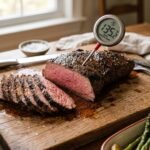
- Insert the probe horizontally into the thickest part of the fillet. Don’t push it all the way through — you want the tip to be in the CENTER of the thickest section.
- Wait for the number to stabilize. Don’t pull it out the second you see 140. Give it 3–5 seconds to settle.
- Check multiple spots if your fillet is uneven in thickness. Thin edges will cook faster than the thick center.
- Avoid touching the pan or baking sheet with the probe tip. That’ll give you the pan temperature, not the fish temperature — and you’ll get a falsely high reading.
What If You Don’t Have a Thermometer?
Not everyone has a kitchen thermometer. Here are reliable visual and tactile cues:
- Color test: Raw tilapia is pinkish-white and slightly translucent. Done tilapia is completely opaque white throughout — no translucency at all.
- Flake test: Press the thickest part gently with a fork and twist. If it flakes easily into clean, distinct layers, it’s done. If it feels mushy or resists flaking, cook it longer.
- Texture test: Done tilapia feels firm but still slightly springy when you press it. If it feels hard or rubbery, you’ve overcooked it.
Warning: Visual cues are helpful, but they’re not as precise as a thermometer. If you cook fish regularly, investing $10–15 in a basic instant-read thermometer is worth every penny for food safety.
Tilapia Cooking Temperature for Different Methods
Here’s where things get practical. The INTERNAL temperature you’re targeting is always 145°F, but the COOKING temperature — meaning the heat you set your oven, grill, or pan to — varies by method.
Baking Tilapia in the Oven
- Oven temperature: 400°F (204°C)
- Cooking time: 10–15 minutes for a standard fillet (about 4–6 oz)
- Best practice: Line your baking sheet with parchment paper or foil. Season the tilapia, place it in a single layer, and bake until it hits 145°F internally.
At 400°F, you get a nice balance — the outside gets a light golden color without drying out the inside. Going higher (like 450°F) can work for very thin fillets but risks overcooking the edges.
Did You Know? Baking at 375°F works too, but adds 3–5 minutes to your cook time. Lower temperatures give you a bigger window before overcooking, which is forgiving for beginners.
Pan-Searing Tilapia
- Pan temperature: Medium to medium-high heat
- Cooking time: 3–4 minutes per side
- Best practice: Heat your oil (avocado oil or light olive oil works great) until it shimmers. Pat the tilapia completely dry with paper towels before placing it in the pan. Moisture is the enemy of a good sear.
Pan-searing gives you that beautiful golden crust. The key is resisting the urge to move the fillet around. Let it sit undisturbed for 3 minutes, then flip once.
Grilling Tilapia
- Grill temperature: 400–450°F (medium-high)
- Cooking time: 3–4 minutes per side
- Best practice: Oil the grill grates well, or use a grill basket. Tilapia is a delicate fish and can stick or fall apart on the grill if you’re not careful.
Grilled tilapia picks up a smoky flavor that baking and pan-searing can’t replicate. If your fillets are thin (less than ½ inch), consider using a cedar plank or foil packet to prevent them from falling through the grates.
Air Frying Tilapia
- Air fryer temperature: 400°F (204°C)
- Cooking time: 8–10 minutes, flipping halfway
- Best practice: Lightly spray or brush the fillets with oil. Don’t overcrowd the basket — air fryers need airflow to cook evenly.
Air frying has become incredibly popular for tilapia because it gives you a crispy texture with very little oil. Check the temperature at the 8-minute mark and add time as needed.
What Happens If You Overcook Tilapia?
Let’s address the other side of the coin. Overcooking tilapia won’t make you sick, but it will make your dinner disappointing.
Once tilapia goes past 150°F, it starts losing moisture rapidly. The proteins tighten and squeeze out water, leaving you with fish that’s:
- Dry and flaky (not in a good way)
- Rubbery in texture
- Bland in flavor — the natural sweetness of tilapia disappears
By 160°F and above, you’re basically eating fish-flavored cardboard.
The sweet spot is right at 145°F — where the fish is fully safe, perfectly moist, and has that delicate, mild flavor tilapia is known for.
Pro Tip: If you’re worried about overcooking, use the “pull early” method. Remove tilapia from heat at 140°F, tent it loosely with aluminum foil, and let it rest for 3 minutes. Carryover cooking handles the rest.
What Happens If You Eat Undercooked Tilapia?
This is a question people don’t always ask out loud, but they definitely wonder about.
Eating undercooked tilapia puts you at risk for foodborne illness. The symptoms can range from mild to serious:
- Mild: Nausea, stomach cramps, mild diarrhea (usually within 6–24 hours)
- Moderate: Vomiting, fever, chills, body aches
- Severe: Dehydration, bloody diarrhea, hospitalization (rare but possible, especially for vulnerable groups)
Who’s most at risk? Pregnant women, young children under 5, adults over 65, and anyone with a weakened immune system should be extra careful. The FDA specifically advises these groups to always cook fish to 145°F — no exceptions.
Disclaimer: If you experience severe symptoms after eating undercooked fish, seek medical attention promptly. This article provides general food safety guidance and isn’t a substitute for professional medical advice.
Common Myths About Cooking Tilapia Temperature
Myth #1: “If It Looks White, It’s Done”
Not always. The outer layers of tilapia turn opaque white well before the center reaches 145°F. A thick fillet can look perfectly done on the outside while the very center is still undercooked. That’s why a thermometer check at the thickest point matters.
Myth #2: “You Can Eat Tilapia Medium-Rare Like Salmon”
This one gets people in trouble. Some fish — like sushi-grade tuna and salmon — can be consumed at lower internal temperatures because they’re frozen at extremely low temperatures (-4°F for 7 days per FDA guidelines) to kill parasites. Farm-raised tilapia doesn’t typically go through this process. Always cook tilapia to 145°F.
Myth #3: “Frozen Tilapia Needs a Higher Temperature”
Nope. The target internal temperature is the same whether your tilapia started fresh or frozen. What changes is the cooking TIME. Frozen tilapia takes about 50% longer to cook. You can cook it directly from frozen — just add extra time and still aim for 145°F internally.
Myth #4: “Thinner Fillets Don’t Need Temperature Checking”
Thin fillets cook fast, which is true. But “fast” can mean the difference between perfectly done and severely overcooked in just 60 seconds. If anything, thin fillets need MORE attention, not less.
Quick Reference: Tilapia Temperature Chart
Here’s a handy reference you can bookmark:
| Doneness Level | Internal Temp | What It Means |
|---|---|---|
| Undercooked | Below 140°F | NOT safe to eat — bacteria may survive |
| Almost Done | 140–144°F | Pull from heat now — carryover will finish it |
| Perfectly Done | 145°F | Safe, moist, flaky — the ideal target |
| Slightly Overdone | 150–155°F | Still safe, but getting dry |
| Overcooked | 160°F+ | Dry, rubbery, flavor loss |
Tips for Perfectly Cooked Tilapia Every Single Time
You’ve got the temperature knowledge. Now here are the habits that separate good home cooks from great ones:
- Pat your fillets dry before cooking. Surface moisture creates steam instead of a sear and can make oven-baked tilapia soggy.
- Bring tilapia to room temperature for 10–15 minutes before cooking. Cold fish in a hot pan cooks unevenly — the outside overcooks while the center stays raw.
- Season generously. Tilapia has a mild flavor. It needs help. Garlic powder, paprika, lemon pepper, cumin, or a simple lemon-herb blend all work beautifully.
- Don’t overcrowd your pan or baking sheet. Leave at least an inch between fillets. Crowding creates steam and prevents browning.
- Invest in an instant-read thermometer. Seriously. A $12 thermometer will improve every protein you cook — not just fish.
- Use the 10-minute rule as a rough guideline: cook fish for about 10 minutes per inch of thickness at 400°F. It’s not perfect, but it gives you a solid starting point.
How Long Does It Take Tilapia to Reach 145°F?
Cooking time depends on three things: the thickness of the fillet, the cooking method, and whether you started with fresh or frozen fish.
Here are general guidelines for a standard 4–6 oz fresh fillet (about ¾ inch thick):
- Oven at 400°F: 10–15 minutes
- Pan-searing (medium-high): 6–8 minutes total (3–4 per side)
- Grilling (400–450°F): 6–8 minutes total
- Air fryer at 400°F: 8–10 minutes
- Poaching in liquid: 8–12 minutes
For frozen tilapia cooked directly from freezer: Add roughly 50% more time to all estimates above. A frozen fillet in the oven at 400°F will take about 15–22 minutes.
These are estimates. Your thermometer is the final authority — not the clock.
FAQ Section
Is tilapia done at 145°F or 165°F?
Tilapia is done at 145°F (63°C), as recommended by the USDA and FDA. The 165°F temperature is for poultry (chicken and turkey), not fish. Cooking tilapia to 165°F will result in very dry, overcooked fish. Stick with 145°F for safe, perfectly cooked tilapia.
Can you eat tilapia at 140°F?
Technically, 140°F is slightly below the FDA’s recommended safe temperature. If you remove tilapia from heat at 140°F and let it rest for 3 minutes, carryover cooking will bring it up to approximately 143–145°F, which is within the safe range. Eating tilapia that never reaches 145°F carries a slightly higher risk of foodborne illness.
How do you know tilapia is done without a thermometer?
Look for three signs: the flesh should be completely opaque white with no translucency, it should flake easily when pressed with a fork, and it should feel firm but not rubbery to the touch. If any part still looks glassy or pinkish, it needs more time. A thermometer is always the most reliable method, though.
Is slightly pink tilapia safe to eat?
Pink tilapia usually indicates it’s undercooked. Unlike salmon, tilapia should be fully opaque white throughout when properly cooked. If you see pink or translucent areas, return it to the heat until it reaches 145°F internally. Don’t rely on color alone — always confirm with a thermometer if you’re unsure.
Does tilapia continue cooking after you remove it from heat?
Yes. This is called carryover cooking. After you remove tilapia from the heat source, the internal temperature can rise by 2–5°F over the next few minutes. This is why many experienced cooks pull fish at 140–142°F and let it rest briefly. The result is tilapia that’s exactly at 145°F — safe and still juicy.
Your Next Step
Here’s what it all comes down to: 145°F is your number. Write it on a sticky note and put it on your fridge if you need to. Every cooking method, every seasoning, every recipe — they all lead to the same destination. Hit 145°F at the thickest part, let the fish rest for a few minutes, and you’ll have tilapia that’s safe, moist, and genuinely tasty.
If you don’t own an instant-read thermometer yet, grab one. It’s the single most useful kitchen tool under $15, and it takes the guesswork out of cooking any protein. Once you start using one, you’ll wonder how you ever cooked without it.
Now go make some tilapia. You’ve got this.