Undercooked pork sausage sends roughly 525,000 Americans to the doctor every year with foodborne illnesses linked to Trichinella, Salmonella, and other pathogens — and most of those cases happen right at home, not in restaurants. That’s a stat from the CDC that should make anyone pay closer attention to their skillet.
Here’s the thing: pork sausage doesn’t give you the same visual cues that a steak or chicken breast does. You can’t just slice it open and look for “clear juices” and call it a day. The casing hides everything. The spices mess with the color. And if you’re going by “feel” alone, you’re honestly guessing.
So how do you actually know your pork sausage is safe to eat? That’s exactly what this article covers — from the one tool that removes all doubt, to visual and texture cues, to specific methods for different types of sausage. Whether you’re pan-frying breakfast links, grilling brats for a cookout, or baking Italian sausage for pasta night, you’ll walk away knowing exactly what to look for.
The Only Number That Actually Matters: 160°F Internal Temperature
Let’s get the most important piece out of the way first.
The USDA says pork sausage is safe to eat when it hits 160°F (71°C) internally. Not 150°F. Not 155°F. Exactly 160°F.
Why this specific number? Because at 160°F, harmful bacteria like Salmonella, E. coli, and Trichinella parasites are killed almost instantly. There’s no “resting time” workaround here like you might use with whole cuts of pork. Ground pork — which is what sausage is made from — has bacteria mixed throughout the meat, not just on the surface. So every single bit needs to reach that safe temperature.
Now, you might be thinking: “Wait, I’ve read that whole pork cuts are safe at 145°F.” You’re right. The USDA updated its guidelines for whole pork muscles back in 2011, bringing the safe temp down from 160°F to 145°F with a 3-minute rest. But that rule applies to intact cuts like pork chops and pork tenderloin — not ground pork products like sausage.
The grinding process pushes surface bacteria deep into the meat. That’s why ground pork, ground beef, and all sausages need a higher internal temp to be safe. Same reason your hamburger patties need 160°F too.
Quick fact: Some pork sausages contain added ingredients like cheese, apple, or jalapeño. These don’t change the safe cooking temperature. 160°F still applies regardless of what’s mixed in.
Why You Need a Meat Thermometer (No Shortcuts)
I know, I know — your grandmother never used a thermometer and everyone survived. But here’s the reality: a meat thermometer is the only way to know for sure that your pork sausage is cooked through. Everything else is an educated guess.
And guessing with ground pork isn’t a great idea.
What Type of Thermometer Works Best?
An instant-read digital thermometer is your best friend for sausage. You insert it, get a reading in 2–4 seconds, and you’re done. No waiting around, no second-guessing.
Dial thermometers work too, but they’re slower (sometimes 15–20 seconds) and the probes are thicker, which means a bigger hole in your sausage casing. That lets juices escape, and nobody wants a dry sausage.
If you’ve never used one before or you’re not sure you’re reading it right, check out this helpful guide on how to read a meat thermometer — it covers different types and how to get an accurate reading every time.
Where Exactly Do You Insert the Thermometer?
This part trips people up. You want the probe in the thickest part of the sausage, right in the center. Not touching the pan, not poking through to the other side, and definitely not just barely under the surface.
For link sausages, insert the probe through one end, sliding it toward the center lengthwise. This gives you the most accurate reading because you’re measuring the coldest point — the very middle of the meat.
For sausage patties, go straight down through the top into the center. Patties are thinner, so be careful not to push through and touch the cooking surface. That’ll give you a falsely high reading.
Pro Tip: Check more than one sausage if you’re cooking a batch. Heat isn’t always even across your pan or grill, and one sausage at 165°F doesn’t mean the one in the corner is there too.
Visual and Texture Cues (When You Don’t Have a Thermometer)
Okay, let’s be honest. Sometimes you’re at a campsite, or your thermometer battery died, or you just don’t have one handy. What then?
Visual and texture cues aren’t perfect, but they can help. Just know that they’re a backup plan, not the main strategy.
Color of the Meat Inside
Cut into the thickest sausage in your batch. Fully cooked pork sausage should look grayish-brown or tan throughout — with no pink remaining in the center.
But here’s where it gets tricky. Some sausages contain paprika, cayenne, or curing salts (like sodium nitrite), and these ingredients can keep the meat looking pink even when it’s fully cooked. Ever noticed how a hot dog stays pink no matter how long you cook it? Same principle.
So if you’re cooking a cured or heavily spiced sausage and the inside looks slightly pink, that doesn’t automatically mean it’s raw. But if you’re cooking plain breakfast sausage and it’s pink in the middle? Put it back on the heat.
Firmness and Texture
Raw pork sausage feels soft and squishy — kind of like poking a raw meatball. As it cooks, the proteins tighten up and the fat renders out, making the sausage progressively firmer.
A fully cooked sausage should feel firm but not rock-hard. Press it gently with tongs or a finger (careful, it’s hot). If it springs back and feels solid, that’s a good sign. If it still feels mushy or your finger leaves a deep indent, it needs more time.
Think of it like this: raw sausage feels like touching the fleshy part of your palm below your thumb when your hand is relaxed. Cooked sausage feels like that same spot when you press your thumb and pinky together — firm, with a little give.
Juice Color
Pierce the sausage with a fork or knife. The juices that run out should be clear or very light, not pink or reddish. Pink or bloody juices usually mean the center hasn’t reached a safe temperature yet.
Again, this isn’t foolproof. Fat content, spice levels, and curing agents can all affect juice color. But clear juices combined with firm texture and proper internal color? That’s a pretty reliable trio of signs.
Cooking Methods and How They Affect Doneness
Not all cooking methods are equal when it comes to sausage. The method you choose changes how heat moves through the meat, how quickly the sausage cooks, and even how easy it is to overcook or undercook.
Pan-Frying or Skillet Cooking
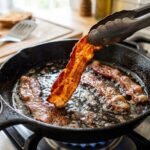
This is the most common way people cook breakfast sausage links and patties. The trick here is medium heat, not high.
High heat chars the outside fast, giving you a dark, crispy exterior that looks perfectly done — while the inside is still raw. This is the number one reason people end up with undercooked sausage. The outside fools them.
Start your sausages in a cold or slightly warm pan with a tiny bit of oil. Turn the heat to medium. Let them cook slowly, turning every 3–4 minutes to brown evenly on all sides. Link sausages usually take about 12–16 minutes total on medium heat. Patties are thinner, so they need about 8–10 minutes, flipping once halfway through.
A little trick that works really well: Add 2–3 tablespoons of water to the pan and cover it for the first 5 minutes. The steam helps cook the inside of the sausage more evenly before you remove the lid and let the exterior crisp up. This is especially useful for thick Italian sausages or bratwurst.
Grilling
Grilling pork sausage is all about indirect heat. If you throw sausages directly over hot coals or high gas flames, you’ll get the same problem as a too-hot skillet — burnt outside, raw inside.
Set up a two-zone fire: one side hot, one side cooler. Start your sausages on the cooler side and let them cook through slowly for about 15–20 minutes, turning occasionally. Once they’re almost at 160°F internally, move them to the hot side for 1–2 minutes per side to get that beautiful char and snap.
Grilled sausage is also a great time to understand temperature control better. If you’re into low-and-slow cooking, the principles are similar to managing temps when you smoke pork shoulder at 275°F — patience and consistent heat are everything.
Baking or Oven-Roasting
Baking is probably the most forgiving method. Preheat your oven to 400°F (204°C), spread your sausages on a sheet pan lined with foil or parchment, and bake for 20–25 minutes, turning once at the halfway mark.
The oven’s ambient heat surrounds the sausage from all sides, so you get more even cooking with less babysitting. It’s perfect for cooking a large batch — think game day, holiday breakfast, or meal prep.
Still check with a thermometer, though. Ovens have hot spots, and a sausage near the back wall might cook faster than one in the front.
Boiling or Poaching
Some people boil sausages before grilling or pan-frying them. This pre-cooks the inside, so you only need to sear the exterior afterward.
Bring a pot of water (or beer, if you’re making brats) to a gentle simmer — around 180–190°F. Don’t use a rolling boil; that can burst the casings. If you’re curious about what “simmer” actually means in terms of stove settings, there’s a useful breakdown on simmer temperature on the stove.
Poach the sausages for about 10–15 minutes, then finish them on a hot grill or pan for 2–3 minutes per side. This two-step method gives you juicy sausages with a perfect exterior every time.
Air Frying
Air fryers have become wildly popular, and they do a great job with sausage. Set the air fryer to 370–380°F and cook sausage links for about 10–13 minutes, shaking the basket or flipping them halfway through.
The circulating hot air crisps the casing nicely while cooking the interior evenly. Just don’t overcrowd the basket — sausages need space for air to flow around them.
Pork Sausage Types and Their Specific Doneness Cues
Different pork sausages behave differently during cooking. Here’s what to keep in mind for the most common types.
Fresh Breakfast Sausage (Links and Patties)
These are usually uncured and mildly seasoned with sage, black pepper, and sometimes maple. They should turn from pink to a uniform grayish-brown when done. No pink in the center. Juices should run clear.
Because they’re small and thin, breakfast sausages cook relatively fast. But don’t rush them — they dry out quickly if you crank the heat.
Italian Sausage (Sweet and Hot)
Italian sausages are thicker and usually come in natural casings. That thickness means the center takes longer to reach 160°F, even when the outside looks done.
The casing should be golden-brown and slightly taut — not split open (that means the heat was too high). Slice one open to check: the inside should be cooked through with no glistening raw spots.
Bratwurst
Traditional brats are German-style sausages made with pork (sometimes mixed with veal). They’re typically poached in beer or broth first, then grilled or pan-fried.
A done bratwurst feels firm and snappy. The casing should “pop” slightly when you bite into it. If it’s limp or soft, it needs more time.
Smoked Pork Sausage (Kielbasa, Andouille)
Here’s an important distinction: many smoked sausages are pre-cooked during the smoking process. Check the label. If it says “fully cooked,” you just need to heat it through to about 140–145°F for serving.
If the label says “uncooked” or “cook before serving,” treat it like any raw pork sausage — 160°F internal temp, no exceptions.
What Happens If You Eat Undercooked Pork Sausage?
Nobody wants to think about this, but it’s worth knowing. Undercooked pork sausage can harbor several dangerous pathogens.
Trichinella spiralis is a parasite that causes trichinosis. Symptoms include nausea, diarrhea, vomiting, fatigue, fever, and muscle pain — sometimes lasting for weeks. While trichinosis cases have dropped dramatically in the U.S. (the CDC reports fewer than 20 cases per year now, thanks to improved farming practices), the risk isn’t zero.
Salmonella and E. coli are bacterial infections that cause severe stomach cramps, diarrhea (sometimes bloody), and fever. These are more common than trichinosis and can be serious for young children, elderly adults, pregnant women, and anyone with a weakened immune system.
The simple fix? Cook your sausage to 160°F. That’s it. No special techniques, no magic recipes. Just proper temperature.
Warning: If you’ve eaten pork sausage that was clearly pink and undercooked, and you develop symptoms like stomach cramps, fever, or diarrhea within 12–72 hours, contact your doctor. Most cases resolve on their own, but severe infections need medical treatment.
Can Pork Sausage Be Pink and Still Safe?
This is one of the most common questions people have, and the answer is: sometimes, yes.
As I mentioned earlier, curing salts like sodium nitrite react with the myoglobin in pork to create a stable pink color that doesn’t change with heat. That’s why cured sausages like hot dogs, some kielbasa, and certain breakfast links stay pink even when cooked well past 160°F.
Paprika, chili flakes, and other red-toned spices can also create a pinkish hue throughout the sausage. Even smoked sausages sometimes develop a pink “smoke ring” near the surface — this is a chemical reaction from the smoke, not a sign of rawness.
So pink isn’t always dangerous. But here’s the rule: if you’re unsure, trust the thermometer, not your eyes. A sausage that reads 160°F on an accurate thermometer is safe, even if it looks a little pink.
This same principle applies to other pork cuts too. You might find it interesting to read about whether pink pork tenderloin is safe — the same logic applies there.
Common Mistakes That Lead to Undercooked (or Overcooked) Sausage
Cooking on Heat That’s Too High
This is the biggest one. High heat creates a beautifully browned exterior while leaving the center dangerously raw. Medium heat, patience, and turning regularly — that’s the formula.
Cutting Into Sausages Too Early
I get it. You want to check if it’s done. But every time you slice into a sausage while it’s cooking, you release juices and fat. This dries out the sausage AND makes it harder to tell if the juices are running clear (because they’ve already escaped). Use a thermometer instead of a knife.
Skipping the Rest Period
After you pull sausages off the heat, let them sit for 3–5 minutes before serving. Residual heat continues cooking the interior slightly (called carryover cooking), and the juices redistribute. If you cut into a sausage immediately, the juices pool out and you’re left with a drier product.
That said, carryover cooking for sausage is minimal — maybe 2–3°F — so don’t pull them off at 155°F expecting them to climb to 160°F. Pull them at 158–160°F to be safe.
Not Accounting for Size Differences
A thin breakfast link and a fat Italian sausage don’t cook at the same rate. If you’re cooking mixed sizes together, the smaller ones will finish first. Remove them early or start the bigger ones a few minutes sooner.
Relying on Cook Time Alone
Recipes say things like “cook for 15 minutes” as a guideline, not a guarantee. Your pan, your stove, your sausage thickness, the starting temperature of the meat — all of these variables affect actual cooking time. Time is a rough estimate. Temperature is the truth.
A Quick Reference for Safe Internal Temperatures
Since you’re already here checking pork sausage temps, you might cook other meats too. Here’s how pork sausage compares:
Pork sausage (ground pork) needs 160°F. Whole pork cuts like pork chops are safe at 145°F with a 3-minute rest. Pulled pork is best around 195–205°F for that fall-apart texture. And if you also cook poultry, turkey burgers need 165°F — even higher than pork sausage.
Knowing these numbers takes the guesswork out of cooking any protein.
FAQ
How long does it take to cook pork sausage?
It depends on the method and thickness. Pan-fried breakfast links take about 12–16 minutes on medium heat. Patties need 8–10 minutes. Oven-baked sausages at 400°F take 20–25 minutes. Grilled sausages need 15–20 minutes using indirect heat. But always confirm doneness with a thermometer reading of 160°F rather than relying on time alone.
Can pork sausage be a little pink inside?
Yes, but only if it has reached 160°F internally. Curing salts, paprika, and smoking can all keep pork sausage pink even when fully cooked. If your sausage is pink and you haven’t checked the temperature, you can’t be sure it’s safe. A thermometer is the only reliable way to confirm doneness when the color is misleading.
What’s the difference between cooked sausage and pre-cooked sausage?
Pre-cooked sausage (like many smoked sausages, hot dogs, and some kielbasa) has already been fully cooked during manufacturing. You just need to heat it to serving temperature, around 140–145°F. Raw or “fresh” sausage — like breakfast sausage, Italian sausage, and fresh bratwurst — must be cooked from raw to an internal temperature of 160°F before eating.
Is it safe to eat pork sausage at 145°F?
No. The 145°F guideline applies only to whole, intact pork cuts like chops, roasts, and tenderloin. Pork sausage is made from ground pork, which means bacteria can be present throughout the meat — not just on the surface. Ground pork products must reach 160°F to be considered safe by USDA standards.
Can you overcook pork sausage?
Absolutely. Overcooked pork sausage becomes dry, crumbly, and tough. The fat renders out completely, and you’re left with something that tastes like cardboard. Aim for exactly 160°F — not 180°F or 190°F. Using a thermometer helps you hit that sweet spot where the sausage is both safe and juicy.
Your Sausage, Your Responsibility
Getting pork sausage right isn’t complicated, but it does require a little attention. Grab a decent instant-read thermometer — you can find a good one for under $15 — and check the center of your thickest sausage before you plate it. That’s the single most reliable thing you can do.
Visual cues like color, firmness, and juice clarity are helpful backups, but they’ll never be as accurate as an actual temperature reading. And with ground pork, accuracy isn’t just about quality — it’s about safety.
Cook it to 160°F, let it rest a few minutes, and enjoy it with confidence. Your body (and your taste buds) will thank you.