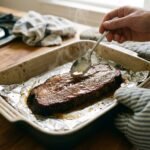
You pull your pork tenderloin out of the oven, slice into it, and there it is — a blush of pink staring right back at you. Your first instinct? Something went wrong. Maybe it’s undercooked. Maybe you should throw it back in for another 10 minutes “just to be safe.”
But here’s something that might surprise you: the USDA updated its pork cooking guidelines back in 2011, lowering the recommended internal temperature for whole cuts of pork from 160°F to 145°F with a 3-minute rest. At 145°F, pork tenderloin will absolutely look pink in the center. And that’s perfectly safe to eat.
So why do so many of us still panic at the sight of pink pork? Blame decades of old advice, the fear of trichinosis, and the deeply ingrained habit of cooking pork until it’s bone-dry and grey. Let’s sort through all of this and figure out exactly when pink pork tenderloin is safe — and when it’s actually a problem.
Why Is Your Pork Tenderloin Pink Inside?
Before you make any judgment call, it helps to understand why pork stays pink even after cooking. It’s not always about being raw or undercooked. Several factors cause that pink color to stick around.
Myoglobin is the protein responsible for the color of meat. It’s not blood — a lot of people think that pink juice on the cutting board is blood, but it’s actually water mixed with myoglobin. In pork tenderloin, myoglobin can retain a pinkish hue even when the meat has reached a safe internal temperature. This is especially true with lean cuts like tenderloin because they have a different muscle composition than something like a pork shoulder or ribs.
The pH level of the meat also plays a role. Pork that has a slightly higher pH tends to hold onto its pink color longer during cooking. This is just basic meat science — it doesn’t mean the meat is raw.
Cooking method matters too. If you smoke your pork tenderloin, you’ll often see a distinct pink ring just beneath the surface. That’s the smoke ring, caused by gases from the wood reacting with myoglobin. It’s actually a sign of good smoking technique, not undercooking. Similarly, if you grill over charcoal or cook at lower temperatures for longer, pink coloring is more likely.
Even the water supply in certain regions can affect meat color during cooking. Minerals in the water interact with the meat proteins, keeping them from turning fully grey. Crazy, right?
The bottom line: color alone is a terrible indicator of doneness. Your eyes can fool you. Your thermometer won’t.
What Temperature Should Pork Tenderloin Reach?
This is the real question — and thankfully, it has a clear answer.
The USDA recommends cooking whole pork cuts (including tenderloin) to an internal temperature of 145°F (63°C), followed by a 3-minute rest period. During that rest, the internal temperature continues to rise slightly and distributes heat evenly, killing any remaining harmful bacteria.
At 145°F, your pork tenderloin will be slightly pink in the center. It’ll also be juicy, tender, and incredibly flavorful — the way pork is supposed to taste.
Now, there’s a difference between pork tenderloin and ground pork. Ground pork needs to reach 160°F because grinding the meat spreads any surface bacteria throughout. So if you’re making pork sausage or a meatloaf with ground pork, don’t apply the 145°F rule. That’s only for whole muscle cuts.
Quick Fact: At 145°F, pork tenderloin is comparable to a medium-cooked steak — slightly pink, juicy, and fully safe. If you’re curious about how doneness levels work in steak, the concept is surprisingly similar for pork.
Some people prefer their pork at 150°F for a little less pink. That’s fine too. What you want to avoid is cranking it up to 165°F or 170°F — that’s where pork tenderloin turns into a dry, tough, flavorless disappointment.
How to Check Pork Tenderloin Doneness the Right Way
If color isn’t reliable, what is? A good instant-read meat thermometer. Seriously, this is the single most important kitchen tool you can own for cooking any meat safely.
Here’s how to do it right with pork tenderloin:
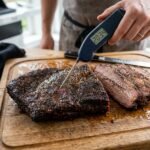
Insert the probe into the thickest part of the tenderloin, making sure the tip is in the center of the meat — not touching the pan, a bone, or poking through to the other side. You want the reading from the deepest, slowest-cooking part.
If you’re unsure how to get an accurate reading, check out this guide on how to read a meat thermometer — it covers the common mistakes people make that lead to wrong readings.
Pro Tip: Pull your pork tenderloin off heat at about 140°F. During the 3-minute rest, carryover cooking will push it up to 145°F or a bit beyond. If you wait until the thermometer reads 145°F while it’s still on the heat, you’ll overshoot and end up at 150–155°F. Not the end of the world, but you’ll lose some juiciness.
Resting isn’t optional, by the way. Beyond food safety, resting lets the muscle fibers relax and reabsorb juices. If you cut into your tenderloin immediately, all that flavorful liquid runs out onto the cutting board instead of staying in your meat.
The Old Trichinosis Fear — Do You Still Need to Worry?
Let’s address the elephant in the room. For decades, people were taught to cook pork until it was grey throughout because of trichinosis — an infection caused by the parasite Trichinella spiralis. This fear was legitimate at one point. Back in the mid-20th century, trichinosis cases were more common because of how pigs were raised and fed.
But here’s what’s changed: Modern farming practices, strict USDA regulations, and improved feed standards have made trichinosis extremely rare in commercially raised pork in the United States. The CDC reports fewer than 20 cases per year in the U.S., and most of those come from wild game meat — not store-bought pork.
Also, Trichinella is killed at 137°F. So even the USDA’s 145°F guideline gives you a comfortable safety margin above what’s needed to eliminate the parasite.
Does that mean you should eat completely raw pork? Absolutely not. Pork should always be cooked to at least 145°F (whole cuts) or 160°F (ground pork). But the idea that pork must be cooked until it’s as dry as cardboard? That’s outdated thinking based on a risk that barely exists anymore.
Pink Pork vs. Undercooked Pork — How to Tell the Difference
This is where people get tripped up. Pink pork and undercooked pork are not the same thing, but they can look similar if you don’t know what to look for.
Safe pink pork (at 145°F) has a slightly rosy center, but the texture is firm. When you press it, it springs back. The juices run clear or very lightly tinted. The meat feels cooked through — it’s not squishy or gelatinous. It slices cleanly.
Undercooked pork has a different feel entirely. The center is soft, almost mushy. The juices may look slightly reddish. The texture is glossy and slippery, almost like raw meat. If you try to slice it, the fibers don’t separate cleanly — they feel gummy.
Think of it this way: a medium-rare steak is pink but clearly cooked. Raw steak is pink too, but the texture tells a completely different story. Same principle applies to pork tenderloin.
When in doubt, the thermometer resolves everything. If the thickest part reads 145°F after resting, it’s done. Period. The color could be pink, rosy, or even slightly purplish depending on the specific piece of meat, and it’s still safe.
Does Cooking Method Affect the Pink Color?
Yes, and this is worth understanding because it saves you a lot of unnecessary worry.
Grilling and smoking tend to produce more visible pink. With grilling, the high exterior heat can create a nice sear on the outside while the interior cooks gently to 145°F — leaving a noticeable blush. Smoking adds the smoke ring effect we talked about earlier, which can extend a quarter-inch or more into the meat. If you’ve ever smoked a pork shoulder at 275°F, you’ve probably seen that beautiful pink band. Same concept applies to tenderloin.
Oven roasting at moderate temperatures (375°F–400°F) usually produces less dramatic pink, but you’ll still see it at 145°F internal. The even, surrounding heat cooks more uniformly, so the gradient from outside to center is smoother.
Pan-searing and then finishing in the oven — a really popular method for pork tenderloin — tends to give you a great crust with a distinctly pink center. Because the sear locks in the outside temperature quickly, the middle cooks more slowly and retains more of that rosy hue.
Sous vide is another story. Cooking pork tenderloin sous vide at exactly 145°F for an extended time produces meat that looks very pink — almost like it’s medium-rare. But because it’s held at a safe temperature for a prolonged period, every bit of harmful bacteria is eliminated. The color can be startling if you’re not used to it, but it’s completely safe. And honestly? It’s one of the best ways to cook pork tenderloin.
How Long Should You Rest Pork Tenderloin?
We touched on this earlier, but it’s important enough to dig into a bit more.
Three minutes is the USDA minimum rest time for whole pork cuts. For a pork tenderloin, which is relatively thin and cooks quickly, 3–5 minutes is usually perfect. During this time, the internal temperature will rise by about 3–5 degrees.
Don’t tent it too tightly with foil — you’ll trap steam and soften the crust you worked to build. A loose tent or just leaving it uncovered on a warm cutting board works great.
Resting also gives you a good window to prep your sides, make a quick pan sauce from the drippings, or just take a breath. Cooking pork tenderloin is fast — it usually takes only 20–25 minutes in a hot oven — so these few minutes of rest fly by.
If you enjoy getting your internal temperatures dialed in for other cuts too, you might find it useful to understand the ideal internal temp for pork chops or when pulled pork is really done. The logic is similar but the target temperatures vary quite a bit depending on what you’re cooking.
What If You Accidentally Overcook It?
It happens. You got distracted, the thermometer wasn’t placed right, or you just erred on the side of caution and now your pork tenderloin is sitting at 165°F — dry, pale, and sad.
Don’t throw it out. You can rescue it.
Slice it thin — thinner slices feel less dry on the palate. Serve it with a sauce, gravy, or even a simple pan jus made from the drippings with some chicken broth and a splash of apple cider vinegar. The liquid compensates for the lost moisture.
You can also repurpose overcooked pork tenderloin in tacos, stir-fries, or sandwiches where it’s combined with other moist ingredients and sauces. Nobody’s going to complain about sliced pork on a warm tortilla with pickled onions and chipotle mayo.
But the real fix is prevention. Use a thermometer every time. Pull the meat at 140°F. Rest for 3–5 minutes. It becomes second nature after a few cooks.
A Note About Pork Tenderloin for Sensitive Groups
While 145°F is safe for the general population, some groups may want to cook pork a bit more. The USDA suggests that immunocompromised individuals, pregnant women, young children, and older adults consider cooking pork to 160°F for extra precaution.
At 160°F, you’ll lose the pink center and some juiciness, but you’ll still get a decent result if you don’t go much beyond that. Brining the tenderloin beforehand helps — soaking it in a simple salt-sugar-water solution for 30 minutes to an hour adds moisture that survives higher cooking temperatures.
This isn’t about fear-mongering. For most healthy adults, 145°F with a 3-minute rest is perfectly safe. But it’s worth knowing the nuance if you’re cooking for someone with specific health considerations.
FAQ
Is pork tenderloin safe to eat at 145°F?
Yes. The USDA updated its guidelines in 2011 and confirmed that whole pork cuts are safe at 145°F with a 3-minute rest. At this temperature, harmful bacteria like Salmonella are eliminated, even though the meat may look slightly pink inside.
Why is my pork tenderloin pink after cooking to the right temperature?
Myoglobin — the protein that gives meat its color — doesn’t always turn grey at 145°F. Factors like the meat’s pH level, cooking method (especially smoking or grilling), and even the minerals in your water can keep pork looking pink. If your thermometer confirms 145°F, the pink is purely cosmetic and completely safe.
What’s the difference between pink pork and raw pork?
Texture is the giveaway. Safely cooked pink pork at 145°F is firm, slices cleanly, and has clear juices. Raw or undercooked pork feels soft, mushy, and looks glossy inside. A meat thermometer removes all guesswork — if it reads 145°F in the thickest part after resting, you’re good.
Can I eat pork tenderloin that’s slightly pink if I’m pregnant?
The USDA recommends that pregnant women, along with young children and immunocompromised individuals, cook pork to 160°F for an added safety margin. At 160°F the pink will mostly disappear, but the meat can still be enjoyable — especially if you brine it beforehand to retain moisture.
Should I use a meat thermometer for pork tenderloin?
Absolutely — and I’d go so far as to say it’s non-negotiable. Color, touch tests, and timing are all unreliable compared to a simple temperature reading. A basic instant-read thermometer costs under $15 and gives you certainty every single time. Here’s a helpful guide on how to read a meat thermometer correctly if you’re not sure about probe placement.
So, Pink Pork Tenderloin — Should You Eat It?
If your thermometer reads 145°F after a 3-minute rest, that pink center isn’t a warning sign — it’s a sign you cooked it right. You’ve hit the sweet spot where pork tenderloin is safe, juicy, and full of flavor.
The days of cooking pork until it’s grey and dry are behind us. Trust your thermometer, not your eyes. Once you get comfortable with this, you’ll never go back to overcooked pork again.
Next time you slice into a tenderloin and see that hint of pink, don’t reach for the oven door. Reach for your fork.