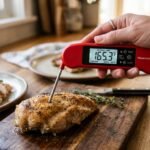
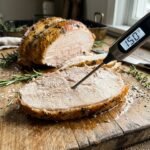
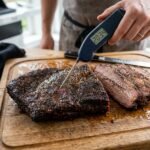
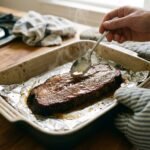
A meatloaf that looks perfectly browned on the outside can still be raw and unsafe in the center. That’s not a rare kitchen horror story — it happens more often than you’d think. And with ground meat, there’s zero room for guessing. Unlike a steak where you can get away with some pink, ground beef mixes surface bacteria all through the meat during grinding. So the only reliable way to know your meatloaf is safe and done? A thermometer and the right target number.
Let’s talk about what that number actually is, why it matters, and how to nail it every single time.
The Magic Number: 160°F (71°C)
The USDA recommends an internal temperature of 160°F (71°C) for any meatloaf made with ground beef, ground pork, ground lamb, or a combination of these meats. That’s the point where harmful bacteria like E. coli and Salmonella are destroyed, making the meatloaf safe to eat.
If your meatloaf uses ground turkey or ground chicken, the target goes up to 165°F (74°C). Poultry carries a higher risk of Salmonella, so it needs those extra few degrees.
Here’s a quick reference:
- Beef/pork/lamb meatloaf — 160°F (71°C)
- Turkey/chicken meatloaf — 165°F (74°C)
- Mixed meat meatloaf (beef + pork, for example) — go with the higher temp of the two meats used
That’s it. Those are your numbers. But knowing the number is only half the battle — getting there properly is where most people stumble.
Why You Can’t Trust Color Alone
You’ve probably heard someone say, “Just cut it open — if it’s not pink, it’s done.” Sounds logical, right? Except it’s wrong.
Ground meat can turn brown well before it hits 160°F. Certain conditions — like the pH of the meat, the presence of seasonings, or even how long the meat sat in the fridge — can cause it to lose its pink color early. So you could cut open your meatloaf, see no pink at all, and still be serving undercooked meat.
The reverse happens too. Some meatloaves stay slightly pink even at 160°F or higher, especially when you add certain ingredients like onions, tomato sauce, or nitrate-containing seasonings. That pink tint doesn’t mean it’s raw.
This is exactly why a reliable meat thermometer is non-negotiable. Color lies. Temperature doesn’t.
How to Check Meatloaf Temperature the Right Way
Sticking a thermometer into a meatloaf seems straightforward, but there are a couple of things people get wrong.
Insert the probe into the thickest part of the meatloaf — the very center. That’s always the last area to cook through. If you poke near the edges or the top, you’ll get a falsely high reading and might pull it out too early.
Push the probe about halfway into the loaf. You want the tip of the sensor sitting right in the middle, not touching the bottom of the pan. If it touches the pan, you’re reading the pan’s temperature, not the meat’s.
Take readings from two spots. Ovens have hot spots, and meatloaf doesn’t always cook evenly. Check the center and then shift the probe an inch to the side. If both readings hit your target, you’re good.
And here’s a detail most recipes skip: don’t check too early. Opening the oven every ten minutes to poke your meatloaf actually slows down cooking because you lose heat each time. For a standard 2-pound meatloaf at 350°F, start checking around the 50-minute mark. You’ll likely need 55 to 75 minutes total, but your thermometer gives you the final answer — not the clock.
The Carryover Cooking Factor
This is something a lot of home cooks don’t account for, and it can make the difference between a juicy meatloaf and a dry one.
When you pull your meatloaf out of the oven, it doesn’t stop cooking immediately. The residual heat trapped in the outer layers continues pushing inward, raising the internal temperature by about 3 to 5 degrees over the next 5 to 10 minutes.
So if your goal is 160°F, you can actually pull the meatloaf at 155°F to 157°F, tent it loosely with foil, and let carryover cooking do the rest. By the time you slice into it, it’ll be right at 160°F — safe, and noticeably juicier than if you’d waited until the thermometer read 165°F in the oven.
This same principle applies to other meats too. If you’ve ever cooked a tri-tip or a pork chop, you’ve probably heard the same advice — pull it a few degrees early and let it rest.
⚠️ Quick Warning: Carryover cooking works well for beef and pork meatloaf. For turkey or chicken meatloaf, play it a bit safer. Poultry is less forgiving, so don’t pull it more than 2-3 degrees below 165°F.
Does Oven Temperature Affect Internal Temp?
Your oven temperature doesn’t change the target internal temp — that stays at 160°F or 165°F no matter what. But it absolutely affects how long it takes to get there and how evenly the meatloaf cooks.
350°F is the sweet spot for most meatloaf recipes. It gives the inside enough time to cook through before the outside gets too dark or crusty. Go higher, like 400°F, and the outer inch overcooks while the center stays underdone. Go lower, like 300°F, and you’re looking at a much longer cook time — though the texture can be incredibly tender.
Some people like to start at 375°F for the first 15 minutes to get a nice crust going, then drop to 350°F for the rest. That approach works well, especially if you glaze your meatloaf and want that sticky, caramelized top.
One thing that makes a bigger difference than people realize: the shape of your meatloaf. A tall, round loaf takes significantly longer to cook through than a flatter, wider one. If you’re short on time, shape it lower and wider. You’ll shave 10-15 minutes off the cooking time without changing anything else.
What Happens If You Undercook Meatloaf?
Let’s be blunt — undercooked meatloaf is a food safety risk. Ground meat is fundamentally different from whole cuts. When a butcher grinds beef, any bacteria sitting on the surface gets mixed throughout the entire batch. That’s why a steak can be safely eaten rare (bacteria is only on the outside and gets killed by searing), but ground beef needs to be cooked all the way through.
Eating meatloaf that hasn’t reached 160°F can expose you to E. coli O157:H7, Salmonella, and other pathogens. Symptoms range from stomach cramps and diarrhea to more serious complications, especially for kids, elderly people, and anyone with a weakened immune system.
This same logic applies to hamburgers and pork sausage. Ground meat = cook it through. No exceptions.
What If You Overcook It?
Nobody’s getting sick from overcooked meatloaf, but nobody’s enjoying it either. Push past 170°F or 175°F, and you end up with a dry, crumbly loaf that falls apart in the worst way. The fats render out, the moisture evaporates, and you’re left chewing on something that feels more like a brick than comfort food.
A few ways to rescue a meatloaf that’s slightly overdone:
Add moisture back. A warm gravy or extra glaze on top can mask some of the dryness. It’s not a perfect fix, but it helps.
Repurpose it. Crumble the meatloaf into pasta sauce, taco filling, or a shepherd’s pie base. Mixed with other wet ingredients, the dryness becomes much less noticeable.
But the real solution is prevention. Use a thermometer, account for carryover, and pull it at the right time. That 5-degree window between 155°F and 160°F is where the magic happens.
Choosing the Right Thermometer
You don’t need to spend a fortune, but you do need the right type.
An instant-read digital thermometer is ideal for meatloaf. You insert it, get a reading in 2-5 seconds, and pull it out. Brands like ThermoWorks, ThermoPro, and even basic models from your local kitchen store work fine. Look for one that’s accurate to within ±1°F.
A leave-in probe thermometer is another solid option, especially if you don’t want to keep opening the oven. You insert the probe before cooking, run the wire out through the oven door, and monitor the temperature on a display sitting on your counter. Some even connect to your phone via Bluetooth.
Old-school dial thermometers work too, but they’re slower and less precise. If that’s what you’ve got, it’s still way better than guessing.
For a deeper look at thermometer types and how to use them properly, check out this guide on reading a meat thermometer.
Pro Tips for a Perfectly Cooked Meatloaf
Don’t pack the meat too tightly. Over-mixing and compressing ground meat makes meatloaf dense and tough. Mix until the ingredients are just combined, shape it gently, and stop.
Use a baking sheet instead of a loaf pan. A loaf pan traps moisture and essentially steams the bottom and sides, which can leave you with a soggy texture. Free-forming your meatloaf on a sheet pan (or a wire rack set over a sheet pan) lets heat circulate evenly and gives you a better crust on all sides.
Let it rest before slicing. Give your meatloaf a full 10 minutes after pulling it from the oven. The juices redistribute during this time, and slicing too early lets all that moisture run out onto the cutting board instead of staying in the meat.
Glaze in stages. If you love that sweet, tangy glaze (and who doesn’t), brush on the first layer about 20 minutes before the meatloaf is done, then add another coat in the last 10 minutes. This builds layers of flavor without burning the sugars.
Temperature Guide for Different Meatloaf Variations
Not every meatloaf is made the same way, so here’s how different ingredients shift your approach.
Classic beef meatloaf: 160°F internal temp. Standard rules apply. Beef fat keeps it moist, so you’ve got a bit of buffer if you slightly overshoot.
Turkey meatloaf: 165°F internal temp. Turkey is leaner, so it dries out faster. Adding a tablespoon of olive oil or some finely diced mushrooms to the mix helps retain moisture. If you want to learn more about ground poultry safety, the turkey burger internal temp guide covers similar ground.
Pork and beef blend: 160°F. This is the classic “diner-style” combo. The pork adds richness and fat, and the beef brings structure. Cook to the beef standard since both meats share the same safe temp.
Meatloaf with cheese or stuffing inside: Still 160°F or 165°F depending on the meat, but check in multiple spots. Fillings create pockets where heat can behave unpredictably. The cheese might be molten while the meat around it is still undercooked.
How Long Does Meatloaf Take at Different Oven Temps?
While time is never as reliable as a thermometer, having a rough estimate helps you plan your meal.
For a 2-pound meatloaf (the most common size):
- 325°F — 70 to 90 minutes
- 350°F — 55 to 75 minutes
- 375°F — 45 to 60 minutes
- 400°F — 40 to 50 minutes (watch for over-browning)
These are estimates. Your meatloaf’s actual shape, density, starting temperature (cold from the fridge vs. room temp), and your oven’s accuracy all play a role. Always verify with a thermometer.
💡 Did You Know? Letting your meatloaf mixture sit at room temperature for 15-20 minutes before putting it in the oven helps it cook more evenly. A cold-from-the-fridge loaf has a bigger temperature gap between the outside and center, which means the edges cook faster while the middle lags behind.
Storing and Reheating Leftover Meatloaf
Cooked meatloaf keeps well in the fridge for 3 to 4 days when stored in an airtight container. For longer storage, wrap individual slices tightly in plastic wrap, then foil, and freeze for up to 3 months.
When reheating, the internal temp should reach 165°F — regardless of what meat was used originally. That’s the USDA’s standard for reheating any previously cooked food.
The best reheating method? Oven at 250°F with a splash of broth or water in the pan and foil over the top. It takes 20-25 minutes for refrigerated slices, but the low heat prevents further drying. Microwave works in a pinch, but the texture suffers.
This is similar to how you’d handle reheating brisket — low, slow, with added moisture.
FAQ
Can meatloaf be a little pink inside at 160°F?
Yes, and it’s completely fine. Some ingredients like onions, tomato products, or certain spices can cause a pink tint even when the meat is fully cooked. As long as your thermometer reads 160°F (or 165°F for poultry-based meatloaf), the color doesn’t matter. Trust the temp, not the color.
What’s the best thermometer for checking meatloaf?
An instant-read digital thermometer gives you the fastest and most accurate reading. Insert it into the thickest part of the center, wait a few seconds, and you’ll know exactly where you stand. Leave-in probe thermometers are great too if you want to monitor the temp without opening the oven.
Should I check meatloaf temp before the timer goes off?
There’s no need to check early unless you suspect your oven runs hot. For a 2-pound meatloaf at 350°F, start checking around the 50-minute mark. Checking too often means opening the oven repeatedly, which drops the temperature inside and extends your total cook time.
Can I cook meatloaf to 150°F if I let it rest?
That’s cutting it too close for ground meat. Carryover cooking adds about 3-5 degrees, so pulling at 155°F can work — but 150°F is risky. You’d need the carryover to add a full 10 degrees, which isn’t guaranteed. Stick with 155°F as the absolute minimum pull temperature for beef or pork meatloaf.
Does altitude affect meatloaf cooking temperature?
The target internal temp stays the same regardless of altitude. But at higher elevations, water evaporates faster and ovens may behave differently, so your meatloaf might need slightly more time or a bit of extra moisture in the mix to prevent drying out.
Get the Temp Right, Get the Meatloaf Right
Meatloaf is one of those meals that should be easy — and it is, once you stop guessing. 160°F for beef, pork, or lamb. 165°F for turkey or chicken. That’s your entire cheat sheet.
Grab a decent thermometer, check the center of the loaf, account for a few degrees of carryover cooking, and let it rest before you slice. Do those four things and you’ll get a meatloaf that’s safe, juicy, and the kind of comfort food people ask for seconds of.
Next time you’re shaping that loaf, you won’t need to wonder if it’s done. You’ll know.