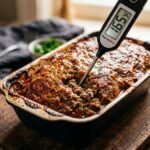
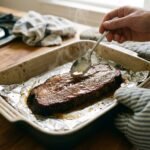
You just pulled your turkey breast out of the oven, slid the thermometer in, and it reads 150°F. Now you’re staring at it, wondering — is this actually safe to eat, or am I about to make everyone at the table sick?
It’s a fair question. For years, we’ve all heard that poultry needs to hit 165°F, no exceptions. That number is practically burned into our brains. So seeing 150 on your thermometer can trigger a mini panic attack, especially if you’ve got guests waiting.
But here’s where things get interesting. The science behind food safety isn’t quite as black-and-white as a single magic number. There’s more to the story, and understanding it can actually help you cook a juicier, tastier turkey breast without putting anyone at risk. Let’s sort this out properly.
What the USDA Actually Says About Turkey Temperature
The USDA’s official recommendation is clear: cook all poultry, including turkey breast, to an internal temperature of 165°F (73.9°C). At this temperature, harmful bacteria like Salmonella and Campylobacter are killed almost instantly. We’re talking about destruction within fractions of a second.
That 165°F number isn’t random. It’s the temperature where you get what’s called an “instant kill” — meaning even if your thermometer reading is slightly off, you’ve still got a solid safety margin. The USDA chose this number because it’s simple, foolproof, and doesn’t require any extra math or timing.
So by this standard, 150°F is technically undercooked turkey according to USDA guidelines.
But — and this is a big but — the USDA itself acknowledges something most people don’t realize. Temperature and time work together. Killing bacteria isn’t just about hitting a number. It’s about how long the meat stays at a given temperature. This concept is called pasteurization, and it changes the whole conversation.
The Science of Pasteurization: Why Temperature Alone Doesn’t Tell the Full Story
Here’s the part most people miss. Bacteria don’t die like a light switch — on at 164°F, off at 165°F. They die gradually as they’re exposed to heat over time. The higher the heat, the less time you need. The lower the heat, the more time you need.
Think of it like this: imagine bacteria are ice cubes. Drop them in boiling water, they melt instantly. Put them in a warm room, they still melt — it just takes longer. Either way, the result is the same. The ice is gone.
The same principle applies to Salmonella in your turkey breast.
At 165°F, Salmonella is destroyed in less than 1 second. That’s why the USDA picked this number — there’s zero guesswork.
At 160°F, Salmonella is destroyed in about 14 seconds.
At 155°F, it takes roughly 1 minute.
At 150°F, you need to hold the turkey at that temperature for approximately 4 to 5 minutes to achieve the same level of bacterial destruction.
These numbers come from the USDA’s own pasteurization tables for poultry. So yes, turkey breast held at 150°F for the right amount of time can be just as safe as turkey pulled at 165°F. The bacteria are equally dead either way.
⚠️ Important Disclaimer: This time-and-temperature approach requires accurate equipment and careful monitoring. If you’re unsure about your thermometer’s accuracy or your ability to hold a precise temperature, stick with 165°F. Food safety isn’t something to gamble on.
Why Would Anyone Want Turkey at 150°F?
If 165°F is the easy, safe number, why are so many home cooks and professional chefs obsessed with pulling turkey breast at a lower temperature?
One word: texture.
Turkey breast is a lean cut. It doesn’t have the fat marbling you’d find in a ribeye or the connective tissue that breaks down in a brisket. When you push lean meat past 160°F, the muscle fibers contract hard and squeeze out moisture. The result? Dry, chalky, stringy turkey that needs a swimming pool of gravy to be edible.
If you’ve ever eaten turkey that felt like chewing cotton, it was almost certainly overcooked. And with the USDA’s 165°F target, it’s shockingly easy to overshoot, especially with carryover cooking (we’ll get to that in a minute).
Professional chefs — the ones cooking at top-tier restaurants — routinely pull turkey breast between 150°F and 157°F. They rely on precise thermometers and understand the pasteurization window. The result is turkey that’s moist, tender, and still completely safe. It’s a different eating experience altogether.
That said, this approach isn’t for everyone. If precision cooking makes you nervous, there’s absolutely nothing wrong with cooking to 165°F and calling it a day. A properly brined turkey at 165°F can still be plenty juicy. But if you want to understand why 150°F keeps coming up in cooking conversations, this is the reason.
Carryover Cooking: The Hidden Temperature Boost
Here’s something that catches a lot of people off guard. Your turkey breast doesn’t stop cooking the moment you pull it from the oven. The residual heat inside the meat continues pushing the temperature upward for several minutes after removal.
This is called carryover cooking, and with a turkey breast, you can expect the internal temp to rise by 5 to 10°F during the resting period.
So if you pull your turkey breast at 150°F and tent it loosely with foil, by the time it’s done resting (about 15–20 minutes), the internal temperature will likely be sitting around 155°F to 160°F. That’s significantly closer to — or even above — the pasteurization threshold when you account for the time the meat spends in that temperature range.
This is exactly why experienced cooks pull their turkey “early.” They’re not ignoring food safety — they’re accounting for carryover. They know the temp will keep climbing.
🔥 Pro Tip: If you’re aiming for a final resting temperature of 157–160°F, pull the turkey breast out of the oven between 150°F and 153°F. Rest it for at least 15 minutes. Use a reliable meat thermometer to monitor the temperature during the rest — don’t just guess.
A similar concept applies across different proteins. For instance, knowing the right internal temperature for tri-tip or understanding when pork sausage is fully cooked also involves understanding how heat behaves inside meat after cooking stops.
The Role of Your Thermometer (And Why It Matters More Than You Think)
All of this time-and-temperature talk is completely useless if your thermometer is inaccurate. And here’s the uncomfortable truth — a lot of home kitchen thermometers are off by 5°F or more.
If your thermometer reads 150°F but the actual temperature inside the meat is 145°F, you’re in a genuinely risky zone. At 145°F, you’d need to hold the turkey at that temperature for well over 10 minutes to achieve full pasteurization, and most people aren’t monitoring that closely.
So before you even think about pulling turkey at a lower temperature, do two things. First, invest in a good instant-read digital thermometer. Brands like ThermoWorks, ThermoPro, and MEATER are popular for a reason — they’re accurate and fast. Second, calibrate your thermometer regularly. Stick it in a glass of ice water. It should read 32°F (0°C). If it’s off, adjust accordingly or replace it.
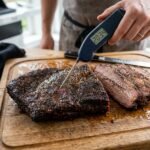
You should also know where to probe. Insert the thermometer into the thickest part of the turkey breast, avoiding bone. Bone conducts heat differently and can give you a misleadingly high reading. If you want more details on proper probing technique for different meats, this guide on where to probe brisket covers the general principle well — same logic applies.
What About Ground Turkey? A Critical Difference
This is one area where you absolutely cannot apply the same logic. Ground turkey (and all ground poultry) is a completely different situation.
With a whole turkey breast, bacteria primarily live on the surface. The inside of an intact muscle is essentially sterile. So even at lower temperatures, the exterior — which gets the most heat — kills surface bacteria effectively.
Ground turkey is different. The grinding process mixes surface bacteria throughout the entire meat. Bacteria that were on the outside are now on the inside. Every particle of that ground meat has potentially been exposed.
For ground turkey, 165°F is non-negotiable. No exceptions. No pasteurization time tricks. Don’t play around with this one.
If you’re making turkey burgers, get that thermometer to 165°F before serving. Same rule applies to hamburger internal temperatures — ground meat demands full cooking every single time.
How to Safely Cook Turkey Breast to a Lower Temperature
If you’ve decided you want to try pulling your turkey breast at a lower temperature for better texture, here’s a practical approach that keeps safety front and center.
Start with brining. Whether you wet brine or dry brine your turkey breast, this step adds moisture and flavor that acts as insurance against dryness. Even if you slightly overshoot your target temp, a brined turkey breast forgives you. A 12–24 hour dry brine with kosher salt works wonders.
Cook at a consistent oven temperature. Somewhere between 325°F and 350°F gives you good control. Going too hot means the outside overcooks before the inside catches up. Going too low extends cooking time unnecessarily.
Monitor temperature continuously. Don’t just check once at the end. Use a leave-in probe thermometer so you can watch the temperature climb in real time. This is the single most important step. You want to pull the turkey breast at 150–153°F.
Rest properly. Once you pull it out, tent loosely with aluminum foil. Let it rest for at least 15–20 minutes. During this time, the internal temperature should climb to 155–160°F. Keep your thermometer in the meat during the rest so you can confirm this.
Verify the final temperature. After resting, check the temp one more time in the thickest spot. If it’s reached at least 155°F and has held there for a few minutes, you’ve achieved safe pasteurization according to USDA time-temperature tables.
Did you know? The concept of resting meat isn’t just about safety — it also lets the juices redistribute throughout the meat. Cut into a turkey breast immediately after cooking and those juices flood your cutting board instead of staying in the meat. That’s true for turkey, steak, or really any protein you cook.
The Visual Test: Why “No Pink” Isn’t Reliable
A lot of people still judge doneness by cutting into the meat and checking the color. If it’s pink, it must be raw, right?
Not exactly. Color is one of the least reliable indicators of doneness in poultry.
Turkey breast can appear slightly pink even when it’s fully cooked to 165°F. This can happen because of several factors — the turkey’s age, the cooking method, the presence of myoglobin (a protein in muscle), or even exposure to smoke or certain gases in gas ovens.
On the flip side, turkey can look perfectly white and “done” while still being at an unsafe temperature in the center.
The only trustworthy way to know your turkey breast’s doneness is with a thermometer. Period. Visual cues are useful for things like browning the skin, but they can’t tell you what’s happening deep inside the thickest part of the breast.
150°F vs 165°F: A Side-by-Side Comparison
Let’s put these two temperatures next to each other so you can see the practical differences:
Turkey breast pulled at 150°F (rested to ~157°F):
The meat is noticeably juicier. Slices are tender and have a silky, almost buttery texture. There’s a very slight pinkish hue near the center, which is perfectly safe if pasteurization time has been met. This is what you’d get at a high-end restaurant.
Turkey breast pulled at 165°F (rested to ~170°F+):
The meat is firmer and drier, especially around the edges. The texture is what most Americans grew up eating — familiar, but not as moist. There’s no pink at all. It’s unquestionably safe with zero monitoring needed beyond a quick thermometer check.
The flavor difference isn’t huge — turkey breast is mild either way. But the texture difference is dramatic. Once you’ve had properly rested turkey breast that peaked around 157°F, it’s hard to go back to the 170°F+ version.
That said, safety always comes first. If the idea of pulling turkey early makes you anxious, cook it to 165°F and focus on brining and not overcooking beyond that. A well-brined turkey breast cooked to 165°F is still going to be good.
Who Should NOT Try the Lower Temperature Approach
This isn’t for everyone, and I want to be upfront about that.
If you’re cooking for anyone with a compromised immune system — elderly family members, young children under 5, pregnant women, or anyone going through chemotherapy or dealing with chronic illness — stick with 165°F. These groups are more vulnerable to foodborne illness, and the margin for error matters more.
If you don’t own a reliable, accurate digital thermometer, don’t try this. Analog dial thermometers that came free with your oven aren’t precise enough for this kind of cooking.
If you’re cooking a stuffed turkey, the rules change entirely. The stuffing inside the bird also needs to reach 165°F, and pulling the turkey breast early almost guarantees the stuffing won’t be safe.
And if you’re just not comfortable with it? That’s completely okay. Good cooking is confident cooking. There’s no shame in choosing the simpler, more straightforward path.
FAQ
Is it safe to eat turkey breast at 150°F?
Not immediately — if you pull turkey breast at exactly 150°F and slice into it right away, it hasn’t been at that temperature long enough to destroy all harmful bacteria. You’d need the meat to hold at 150°F for approximately 4–5 minutes for full pasteurization. With proper resting (where carryover cooking pushes the temp higher), turkey breast pulled at 150°F typically reaches 155–160°F, which is within the safe pasteurization range. Always verify with an accurate thermometer.
What is the minimum safe temperature for turkey breast?
The USDA’s official minimum is 165°F for instant safety. If you’re using the time-and-temperature pasteurization method, turkey breast can be safe at lower temperatures (as low as 150°F) if held at that temperature for a sufficient duration. Most food safety experts recommend a final resting temperature of at least 155°F for whole muscle turkey breast if you’re using this approach.
Why does my turkey breast look pink at 150°F?
A slight pink color at 150°F is normal and doesn’t necessarily mean the meat is unsafe. Myoglobin, a protein found in muscle tissue, can retain a pinkish hue even at safe temperatures. Smoke, certain cooking methods, and the age of the bird can also affect color. The only reliable way to judge safety is internal temperature — not color.
How long should turkey breast rest after cooking?
Rest your turkey breast for 15 to 20 minutes after removing it from heat. This allows carryover cooking to raise the internal temperature by 5–10°F and lets the juices redistribute for a moister result. Keep a thermometer inserted during the rest to monitor the temperature climb.
Can I use the 150°F approach with a turkey burger?
No. Ground turkey must always reach 165°F because grinding distributes surface bacteria throughout the meat. The pasteurization shortcut only applies to intact muscle cuts like whole turkey breast, not ground products.
Your Turkey, Your Call
Here’s where it all lands. A turkey breast at 150°F isn’t automatically dangerous, and it isn’t automatically safe either. The answer lives in the details — how accurate your thermometer is, how long the meat rests, whether carryover cooking pushes the temperature into the pasteurization window, and who’s sitting at your table.
If you’ve got the right tools and you understand the science, pulling turkey breast at 150°F and letting it rest to 155–160°F can give you the juiciest, most flavorful turkey you’ve ever made — while still being completely safe to eat.
If you’d rather keep things simple and stress-free, aim for 165°F. Brine your turkey, don’t overcook past 165, and you’ll still put out a great meal.
Either way, the real secret isn’t a specific number on a thermometer. It’s understanding what that number actually means — and now you do. So next time you’re standing over your turkey with a thermometer in hand, you won’t need to panic. You’ll know exactly what to do.