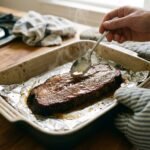
A perfectly smoked brisket can make grown adults emotional. Seriously. That dark, peppery bark cracking open to reveal juicy, pink-ringed meat — it’s almost spiritual. But here’s the thing: the single biggest factor that decides whether your brisket turns out tender or tough is your smoker temperature.
And yet, ask five pitmasters this question and you’ll get seven different answers. Some swear by 225°F. Others push it to 275°F. A few rebels even go up to 300°F. So what’s actually the right temp to smoke a brisket?
That’s exactly what we’re going to sort out today — no fluff, no unnecessary science lectures. Just practical, real-world answers based on what actually works on the smoker, not just on paper.
Why Smoker Temperature Matters So Much for Brisket
Brisket isn’t like a steak you can throw on high heat for a few minutes. It comes from the chest area of the cow — a muscle that does a LOT of work during the animal’s life. That means it’s packed with tough connective tissue, collagen, and intramuscular fat. If you want to learn more about where exactly this cut comes from, check out what part of the cow is brisket.
Here’s the key: collagen doesn’t break down until it reaches around 160–180°F internal temperature, and it needs TIME at that range to fully convert into gelatin. Gelatin is what makes brisket moist and tender. Rush this process with too much heat, and you get a dry, chewy mess.
Your smoker temperature controls how fast (or slow) that internal temp rises. Too low, and you’re looking at an 18+ hour cook with a risk of drying out. Too high, and the outside burns before the inside is done. The sweet spot? That depends on your situation — and we’ll break it all down.
The Classic Answer: 225°F (Low and Slow)
If there’s one temperature that’s synonymous with brisket smoking, it’s 225°F. This is the number you’ll hear from old-school Texas pitmasters, competition BBQ pros, and your uncle who takes his Weber way too seriously.
And honestly? They’re not wrong.
At 225°F, you give the brisket maximum time to break down collagen slowly and evenly. The fat renders beautifully. The smoke has more time to penetrate the meat, building that signature smoke ring and deep flavor. You typically get about 1 to 1.5 hours of cook time per pound at this temperature.
So a 12-pound packer brisket? You’re looking at roughly 12–18 hours. Yeah, it’s a commitment. But the results are hard to argue with.
Who should smoke at 225°F?
This temp works best if you’ve got plenty of time, you enjoy the process, and you’re using an offset smoker or a pellet grill that holds temperature well. If it’s your first time smoking a brisket, 225°F is forgiving — it gives you more room to react if something goes sideways. We’ve covered the 225°F method in detail if you want a deeper look at smoking brisket at 225.
The downside? It takes forever. If you’re cooking for a dinner party at 6 PM, you might need to start at midnight — or earlier. And longer cooks also mean a longer stall (we’ll talk about that soon).
The Modern Favorite: 250°F (The Sweet Spot)
Over the past few years, 250°F has quietly become the most popular temperature for smoking brisket — and for good reason.
At 250°F, you still get the benefits of a low-and-slow cook, but you shave a couple of hours off the total time. The bark develops a little faster, the fat still renders properly, and the collagen breakdown happens just fine. Many top-tier BBQ restaurants — including legendary spots like Franklin Barbecue in Austin, Texas — cook in this range.
Cook time at 250°F runs about 45 minutes to 1.25 hours per pound. That same 12-pound brisket now takes roughly 9–15 hours instead of 18.
The flavor difference between 225°F and 250°F? Honestly, most people can’t tell. In blind taste tests, briskets cooked at both temperatures score almost identically. The bark might be slightly thicker at 250°F, and the smoke ring might be marginally thinner — but we’re talking tiny differences.
If you asked me to pick just one temperature for every brisket cook, 250°F would be it. It balances time, tenderness, and flavor better than any other option.
The Hot and Fast Method: 275°F–300°F
Now here’s where things get interesting. The “hot and fast” method has been gaining serious traction, especially among weekday smokers and competition teams who need to produce great brisket on a tighter schedule.
At 275°F, your cook time drops to roughly 30–45 minutes per pound. A 12-pound brisket can be done in 6–9 hours. That’s a massive time savings.
At 300°F, you’re pushing even faster — some cooks finish in under 6 hours.
Does it work? Yes, but it’s less forgiving. At higher temperatures, the window between “perfectly done” and “overdone” shrinks significantly. You need to wrap your brisket at the right time (more on that below), and you absolutely must monitor internal temperature closely. A reliable probe thermometer isn’t optional here — it’s mandatory. If you’re not confident about how to read a meat thermometer accurately, practice before you try a hot-and-fast brisket.
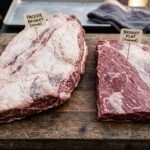
Pro Tip: Hot and fast works better with smaller brisket flats (4–8 pounds) than full packer briskets. The thinner the cut, the more evenly heat penetrates at higher temps. If you’re deciding between a flat and a full packer, this comparison of brisket flat vs packer can help you choose.
The Stall: That Frustrating Plateau and How to Handle It
No matter what temperature you smoke at, you’re going to hit the stall. This is the point — usually around 150°F–170°F internal temperature — where your brisket’s internal temp just… stops rising. Sometimes for hours.
What’s happening? Moisture is evaporating from the meat’s surface, cooling it down at the same rate that your smoker is heating it up. It’s basically the same principle as sweating. Your body sweats to cool down; your brisket “sweats” and stalls.
The stall can last anywhere from 2 to 6 hours depending on your smoker temp, the size of your brisket, humidity levels, and whether the wind is blowing against your smoker.
You’ve got two choices here:
Option 1 — Wait it out. If you’re cooking at 225°F and you’ve got all day, just let the brisket push through the stall naturally. Some purists prefer this because they say it produces a better bark.
Option 2 — Wrap it. This is what most people do. Wrapping your brisket in butcher paper or aluminum foil (the “Texas Crutch”) traps moisture and pushes through the stall much faster. We’ve written a full guide on when and at what temperature to wrap brisket — it’s worth reading if you haven’t wrapped before.
Not sure whether to use butcher paper or foil? They give different results. Butcher paper lets the bark stay crispier while still speeding things up. Foil works faster but can soften your bark. We’ve compared butcher paper vs parchment paper in another post that explains the differences clearly.
What Internal Temperature Should You Pull Your Brisket?
This is actually more important than your smoker temp. You could smoke at 225°F, 250°F, or 275°F — but if you pull the brisket at the wrong internal temperature, nothing else matters.
The target internal temperature for smoked brisket is 195°F–205°F, with most pitmasters aiming for the 200°F–203°F sweet spot. At this range, the collagen has fully converted to gelatin, the fat has rendered, and the meat is tender enough to pull apart with your fingers.
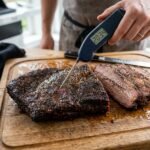
But here’s something most articles won’t tell you: don’t rely on temperature alone. The “probe test” is just as important. When your thermometer probe slides into the thickest part of the brisket with the same resistance as pushing it into warm butter, the brisket is done. Sometimes that happens at 197°F. Sometimes at 205°F. Every brisket is different.
If you want a more in-depth breakdown of when exactly to take the meat off the smoker, we’ve got a detailed guide on when to pull brisket. And for those curious about whether pushing to 210°F is okay, this article on brisket at 210°F internal temp answers that question.
Quick Fact: Placing your temperature probe correctly makes a huge difference. Insert it into the thickest part of the flat, away from any fat pockets. If you probe through a fat seam, you’ll get a false reading. Here’s a helpful guide on where to probe brisket for accurate readings.
Temperature Comparison: Quick Overview
Here’s a straightforward breakdown so you can compare your options at a glance:
225°F — Cook time roughly 1–1.5 hours per pound. Best for beginners and purists. Maximum smoke flavor. Longest cook.
250°F — Cook time roughly 45 min–1.25 hours per pound. Best all-around option. Great balance of time and flavor. Most popular choice.
275°F — Cook time roughly 30–45 minutes per pound. Good for experienced cooks on a schedule. Requires careful monitoring.
300°F — Cook time roughly 25–35 minutes per pound. Hot and fast approach. Works best for smaller cuts. Least forgiving.
All four can produce excellent brisket. Your choice depends on your schedule, your equipment, and how much babysitting you’re willing to do.
Does the Type of Smoker Change the Ideal Temperature?
Yes — and this is something that often gets overlooked.
Offset smokers tend to have hot spots and temperature swings. If your offset runs 225°F at the thermometer, some parts of the cooking chamber might be 240°F or even 210°F. That’s why many offset smoker users set their target at 225°F–250°F and accept some natural fluctuation.
Pellet grills (like Traeger or Pit Boss) hold temperature very consistently thanks to their digital controllers. You can confidently set them at 250°F and know the temp will barely fluctuate. This makes pellet grills great for the 250°F sweet spot. If you’re using a Pit Boss specifically, understanding the P setting can help you fine-tune smoke output and temperature accuracy. And if things go wrong, our Pit Boss troubleshooting guide covers the most common issues.
Kamado-style grills (like Big Green Egg) are extremely efficient at holding temperature and use very little charcoal. They work well at any range but excel at 250°F–275°F because their thick ceramic walls provide incredibly stable heat.
Kettle grills (Weber etc.) require more attention. Temperature swings are common, especially on windy days. If you’re smoking on a kettle, aim for 250°F and accept that you’ll need to adjust vents throughout the cook.
Wood Choice and How It Pairs With Temperature
Your smoker temp and wood selection work together. At lower temperatures (225°F), the meat spends more time absorbing smoke — so milder woods like oak, cherry, or apple work beautifully without overpowering the beef.
At higher temperatures (275°F+), the smoke exposure is shorter. You can get away with stronger woods like hickory or mesquite without the brisket tasting bitter. That said, mesquite is intense. Even at high temps, use it sparingly or mix it with a milder wood. We’ve done a full hickory vs mesquite comparison that’s worth checking out before you decide.
Post oak is the traditional Texas choice and works at any temperature. If you’re unsure, post oak is always a safe bet.
The Rest Period: Don’t Skip This
You’ve smoked your brisket for 12 hours. It hits 203°F internal. The probe slides in like butter. You’re excited. You want to slice it immediately.
Don’t.
Resting is non-negotiable. When you rest a brisket, the juices — which are actively being pushed around by heat — redistribute throughout the meat. Cut into it too soon, and those juices run right out onto your cutting board. You’ll have dry brisket and a very wet board.
Minimum rest time: 1 hour. But most competition pitmasters rest for 2–4 hours. Wrap the brisket in butcher paper (if it isn’t already), then in a towel, and place it in a cooler (no ice). The insulation keeps it at a safe serving temperature for up to 4–5 hours.
Did You Know? Many BBQ restaurants cook their briskets overnight and rest them for 4+ hours before serving. That extended rest actually improves tenderness. The brisket keeps gently breaking down collagen even during the resting phase.
Once it’s properly rested, the way you slice it matters too. Always cut against the grain, and remember that the grain direction changes between the flat and the point. Our guide on how to slice brisket walks you through the technique step by step.
Should You Brine Your Brisket Before Smoking?
This is a question that pops up a lot, especially among folks who brine their turkeys and chickens. A brine — whether dry or wet — can add moisture and flavor to the meat before it hits the smoker.
Dry brining (rubbing the brisket with kosher salt and letting it sit uncovered in the fridge for 12–24 hours) is more popular in the brisket world. It pulls moisture out, dissolves the salt into that moisture, and then reabsorbs it — resulting in better seasoned, juicier meat.
Wet brining is less common for brisket because the cut is so large that it takes a massive container, and the results are often waterlogged rather than flavorful.
If you’re curious about the pros and cons, we’ve covered the full debate in our post on whether you should brine brisket.
Choosing Your Brisket: Grade and Size Matter
Your smoker temperature can be perfect, your technique flawless — but if you start with a low-quality brisket, the results will always be mediocre.
USDA Prime briskets have the most marbling (intramuscular fat), which means more flavor and a more forgiving cook. They’re pricier, but the difference is noticeable. USDA Choice is the sweet spot for most home cooks — good marbling at a reasonable price. Select grade is leaner and harder to keep moist during a long smoke.
If you want to understand the practical difference between these grades, take a look at our prime vs choice brisket breakdown. And if you’re cooking for a crowd and trying to figure out how much meat to buy, our brisket per person guide gives you the exact math.
FAQ
Can I smoke a brisket at 300°F and still get good results?
Yes, you can. The hot-and-fast method at 300°F works, but it requires more experience and close temperature monitoring. The margin for error is smaller — you’re more likely to end up with dry spots or uneven cooking if you’re not paying attention. It’s best suited for smaller brisket flats rather than full packer cuts.
What’s the ideal internal temp to pull brisket off the smoker?
Most pitmasters pull brisket between 200°F and 203°F internal temperature. But don’t rely on the number alone — use the probe test. If the probe slides into the meat with almost no resistance (like warm butter), the brisket is done. Some briskets are ready at 197°F; others need to hit 205°F or even slightly higher.
Is 225°F or 250°F better for a first-time brisket cook?
For your first time, 250°F is the better choice. It gives you nearly the same tenderness and flavor as 225°F but finishes a couple of hours sooner. The shorter cook means less time for things to go wrong, and you won’t be exhausted by the time it’s done. Once you’re comfortable at 250°F, you can experiment with other temperatures.
How long does it take to smoke a 15-pound brisket at 250°F?
At 250°F, expect roughly 45 minutes to 1.25 hours per pound. So a 15-pound brisket could take anywhere from 11 to 19 hours, depending on the stall, your wrapping method, and how your smoker holds temp. Always cook by internal temperature, not by the clock.
What’s the best wood for smoking brisket?
Post oak is the gold standard for Texas-style brisket. Hickory gives a stronger, more assertive smoke flavor. Cherry and apple add a subtle sweetness. Avoid using 100% mesquite for a full brisket cook — it’s too intense over long periods. Mixing mesquite with oak or cherry is a great middle ground.
Your Next Brisket Is Going to Be Better
Here’s the honest truth about smoking brisket: there’s no single “perfect” temperature. 225°F, 250°F, and 275°F can all produce amazing brisket — the right choice depends on your timeline, your equipment, and how hands-on you want to be during the cook.
If you’re just starting out, set your smoker to 250°F, use a reliable thermometer, wrap when you hit the stall, and pull the brisket when it probes like butter around 200°F–203°F. Rest it for at least an hour. Slice against the grain.
That formula has produced thousands of unforgettable briskets, and it’ll work for you too. Don’t overcomplicate it. The best brisket isn’t made by chasing a magic number — it’s made by understanding the process, trusting your tools, and giving the meat the time it needs.
Now fire up that smoker. You’ve got this.