A 15-pound packer brisket looks massive on your counter. But after 12+ hours of smoking, that beast can shrink by nearly 40%. And suddenly, the mountain of meat you thought would feed a small army barely covers a dozen plates. That’s the tricky part about brisket — what you buy and what you actually serve are two very different numbers.
Whether you’re hosting a backyard BBQ, planning a family dinner, or catering a big event, getting the brisket quantity right matters. Buy too little, and you’re that host who ran out of food. Buy too much, and your wallet takes an unnecessary hit. The sweet spot? About ½ pound of cooked brisket per person — but that number shifts depending on a bunch of factors we’ll break down right here.
The Simple Rule: Half a Pound Per Person (Cooked Weight)
Let’s start with the easy math. The standard serving size for cooked brisket is roughly ½ pound (8 ounces) per adult. This works perfectly for a typical BBQ where brisket is the star of the plate and you’ve got a couple of sides going.
But here’s where people get confused — that’s cooked weight, not raw weight. And brisket loses a significant amount of weight during cooking. Fat renders out, moisture evaporates, and the connective tissue breaks down. On average, you’ll lose about 30% to 40% of the raw weight by the time it comes off the smoker.
So if you need ½ pound of cooked brisket per person, you actually need to buy about ¾ pound of raw brisket per person. Some pitmasters round that up to a full pound per person raw, just to be safe — and honestly, that’s not bad advice.
Here’s a quick reference:
- 5 guests → Buy 4–5 lbs raw brisket
- 10 guests → Buy 8–10 lbs raw brisket
- 20 guests → Buy 15–20 lbs raw brisket
- 50 guests → Buy 38–50 lbs raw brisket
These numbers assume brisket is your main protein. If you’ve got other meats on the table — pulled pork, ribs, chicken — you can dial it back a bit.
Why Raw Weight and Cooked Weight Are So Different
This is the part that trips up first-timers. You buy a beautiful 14-pound packer brisket, spend the whole night smoking it, and end up with roughly 8 to 9 pounds of finished meat. Where did the rest go?
Three things happen during a long, slow cook. Fat renders and drips away — and a packer brisket has a thick fat cap plus internal marbling, so there’s plenty to lose. Water evaporates, especially during those long hours in the smoker. And the collagen in the connective tissue melts into gelatin, which is wonderful for texture and flavor but also contributes to weight loss.
The total shrinkage depends on your cooking method and temperature. If you smoke your brisket at 225°F, the lower heat means a slightly longer cook and potentially a bit more moisture loss. Wrapping your brisket partway through (the Texas Crutch method) can help retain more moisture and reduce shrinkage. If you’re curious about when to wrap your brisket and at what temperature, that’s worth reading up on — it can genuinely affect your final yield.
Pro Tip: A good estimate is to expect 60–65% yield from your raw brisket weight. So a 15-lb raw brisket gives you roughly 9 to 10 lbs of sliceable, serveable meat.
Factors That Change How Much Brisket You Need
That ½ pound per person rule is a solid starting point, but real life isn’t that simple. Several things can push that number up or down.
Who’s Eating?
Your guest list matters more than you think. A backyard party full of grown men who’ve been playing football all afternoon? They’ll eat more than ½ pound each — count on ⅔ to ¾ pound cooked per person. A mixed crowd with kids? Children under 12 typically eat about ¼ pound or even less. Older adults or lighter eaters might be happy with ⅓ pound.
Think about your specific crowd. You know your people. If Uncle Dave alone can put away a pound of brisket, factor that in.
What Else Is on the Menu?
This is probably the biggest variable. If brisket is the only meat on the table, people will eat more of it. Stick with ½ pound or even bump it up slightly.
But if you’re running a full BBQ spread — maybe you’ve got ribs on the side, some pulled pork, sausage links, or chicken — you can safely drop the brisket portion to ⅓ pound per person cooked. People graze, they sample a little of everything, and the brisket doesn’t need to carry the whole meal.
Side dishes play a role too. Heavy sides like mac and cheese, baked beans, potato salad, and cornbread fill people up faster. If your sides game is strong, you won’t need as much meat. Lighter sides like coleslaw and pickles? People will compensate by loading up on brisket.
Is It a Meal or a Sandwich?
This sounds like a small detail, but it changes the math. Sliced brisket on a plate with sides requires that standard ½ pound serving. But brisket sandwiches? You only need about ⅓ pound per sandwich because the bun, pickles, onions, and sauce all add volume.
If you’re planning a brisket sandwich bar — which is honestly a genius move for bigger crowds — you can stretch your meat significantly further.
Time of Day
A brisket lunch versus a brisket dinner hits differently. People generally eat lighter at lunch, so you can lean toward the lower end of the estimate (⅓ to ½ pound cooked). Dinner gatherings? Expect fuller appetites. And if alcohol is flowing, appetites tend to increase — plan for at least ½ pound per person, maybe more.
Flat vs. Packer Brisket: It Affects Your Math
Not all briskets are created equal, and the cut you buy changes your yield calculation.
A packer brisket (also called a whole brisket) includes both the flat and the point, connected by a fat layer. It typically weighs 12 to 20 pounds and has more fat overall, which means more shrinkage but also more flavor. If you want to understand the differences better, check out this breakdown of brisket flat vs. packer — it’ll help you make a smarter buying decision.
A brisket flat is the leaner, thinner portion. It weighs around 6 to 10 pounds and has less fat, so it shrinks a bit less. You might get a 65–70% yield from a flat compared to 60–65% from a whole packer. But the flat can also dry out more easily if you’re not careful with your cook.
For big crowds, a packer brisket is usually the better value. For smaller gatherings of 5–8 people, a flat might be all you need.
Did You Know? Brisket comes from the lower chest area of the cow. It’s one of the hardest-working muscles, which is why it has so much connective tissue — and why it needs low-and-slow cooking to become tender. If you’re curious about the anatomy, here’s a look at what part of the cow brisket comes from.
Planning for Leftovers (Smart Move)
Here’s something most brisket guides don’t emphasize enough: leftovers are a feature, not a bug.
Brisket takes 10 to 16 hours to smoke. That’s a massive time investment. So if you’re already going through all that effort, buying a little extra makes a lot of sense. Leftover brisket reheats beautifully and works in tacos, sandwiches, scrambled eggs, quesadillas, chili — the list goes on.
If you want leftovers, add about 20–25% to your total estimate. So instead of ½ pound cooked per person, plan for about ⅔ pound cooked per person, which means buying roughly 1 pound raw per person.
And when it comes to reheating, there’s a right way and a wrong way. You don’t want to dry out that beautiful bark you spent all day building. This guide on how to reheat brisket walks through the best methods.
Buying Guide: How to Shop for the Right Amount
Walking into a butcher shop or navigating the meat section at Costco can be overwhelming when you’re trying to hit a specific number. Here’s how to make it easy on yourself.
Step 1: Count your guests. Get a realistic headcount. People who RSVP “maybe” should be counted as “yes” — better to have extra than not enough.
Step 2: Decide your serving style. Plated meal? Sandwich bar? Buffet? This determines your per-person cooked weight target.
Step 3: Multiply by the right number. For a plated brisket dinner, multiply your guest count by 0.75 lbs (raw weight per person). For a sandwich bar, multiply by 0.5 lbs raw. Want leftovers? Multiply by 1 lb raw.
Step 4: Pick your cut. If you need 15 lbs raw, a single large packer brisket might do it. If you need 30 lbs, you’re looking at two briskets. Keep in mind that cooking two briskets takes the same amount of time as cooking one (assuming your smoker has space) — it just takes more fuel and attention.
Step 5: Check the grade. A Prime grade brisket has more marbling and tends to be juicier and more forgiving during a long cook. Choice grade works well too and costs less. Select grade briskets have less fat and can dry out more easily, so they’re generally not the best pick for smoking.
Real-World Scenarios: Putting the Math to Work
Let’s run through a few common situations so you can see exactly how this plays out.
Scenario 1: Family Dinner for 6
It’s a Saturday night, 4 adults and 2 kids. Brisket is the main dish with mashed potatoes, green beans, and rolls on the side.
Adults: 4 × 0.5 lb cooked = 2 lbs cooked
Kids: 2 × 0.25 lb cooked = 0.5 lb cooked
Total cooked needed: 2.5 lbs
Raw brisket to buy: 2.5 ÷ 0.65 = ~4 lbs raw
A small brisket flat handles this perfectly. Grab a 5–6 pounder and you’ll have some leftovers too.
Scenario 2: Backyard BBQ for 20
Summer party, all adults, brisket is the only meat. Heavy sides — baked beans, coleslaw, cornbread, mac and cheese.
20 × 0.5 lb cooked = 10 lbs cooked
Raw brisket: 10 ÷ 0.65 = ~15.5 lbs raw
A 16-pound packer brisket fits this perfectly. If your crowd includes some serious eaters, bump it to 18 lbs.
Scenario 3: Big Event for 50 with Multiple Meats
You’ve got brisket, pulled pork, and sausage. Tons of sides.
Since brisket isn’t the only protein, drop the per-person serving to ⅓ lb cooked:
50 × 0.33 lb = 16.5 lbs cooked
Raw brisket: 16.5 ÷ 0.65 = ~25 lbs raw
Two medium packer briskets (12–13 lbs each) give you about 25 lbs raw, with a little buffer.
Don’t Forget About the Cook Itself
Buying the right amount of brisket is only half the battle. You also need to cook it properly to maximize your yield and make sure every slice is tender and juicy. A few quick reminders:
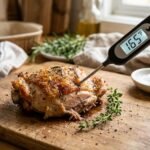
Temperature matters. Most experienced pitmasters agree that brisket is done when the internal temp hits around 195–205°F. Some even push to 210°F for that ultra-tender result. Use a reliable meat thermometer — if you’re not sure how, here’s a quick refresher on how to read a meat thermometer accurately.
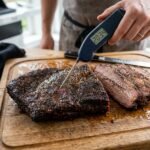
Knowing when to pull it off the smoker is an art. Temperature is important, but the “probe test” — where a thermometer probe slides into the meat like it’s warm butter — is the real indicator. This guide on when to pull brisket explains the process clearly.
Resting is non-negotiable. After you pull the brisket, wrap it in butcher paper (or foil if that’s what you’ve got), towel it up, and let it rest in a cooler for at least 1 hour — 2 to 4 hours is even better. This lets the juices redistribute and actually improves your yield because less juice runs out when you slice. Speaking of wrapping material, there’s an interesting debate between butcher paper and parchment paper that’s worth knowing about.
Slicing technique matters too. Always slice against the grain, and slice thin. Thick slices feel chewy even when the brisket is perfectly cooked. And remember, the grain direction changes between the flat and the point, so you need to adjust your angle as you move through the cut. Here’s a helpful guide on how to slice brisket the right way.
What If You Bought Too Much?
It happens. Maybe five people cancelled last minute, or your sides were so good nobody went back for more brisket. Don’t stress — cooked brisket stores and reuses incredibly well.
In the fridge, properly wrapped cooked brisket stays good for 3 to 4 days. In the freezer, it can last 2 to 3 months without losing much quality. The key is to store it with some of its juices — that keeps it moist when you reheat it later.
Leftover brisket ideas that go beyond just reheating a plate:
- Brisket tacos with pickled onions and cilantro
- Brisket grilled cheese (trust me on this one)
- Brisket chili — the smoky flavor takes it to another level
- Brisket hash with potatoes and eggs for breakfast
So honestly, “too much brisket” is never really a problem. It’s a gift.
A Quick Word About Brining
Some people wonder if brining their brisket before cooking affects the final weight and serving calculations. Here’s the short answer: brining can help the brisket retain more moisture during cooking, which slightly improves your yield. But the difference isn’t dramatic enough to change your buying math. Stick with the numbers above whether you brine or not.
FAQ
How much brisket do I need per person for sandwiches?
About ⅓ pound of cooked brisket per sandwich. Since the bun, sauce, pickles, and onions add bulk, you don’t need as much meat as you would for a plated serving. For 10 people, that’s roughly 3.5 lbs cooked, or about 5–6 lbs raw.
Can I cook two smaller briskets instead of one large one?
Absolutely. Two smaller briskets cook in roughly the same amount of time as one large brisket, as long as your smoker has enough space and good airflow. Some pitmasters actually prefer this approach because smaller cuts are easier to manage and tend to cook more evenly.
How much does brisket shrink when you cook it?
Brisket typically loses 30–40% of its raw weight during cooking. A 15-pound raw brisket will yield about 9–10 pounds of cooked meat. The exact shrinkage depends on fat content, cooking temperature, whether you wrap it, and how long it rests afterward.
Is ½ pound of brisket per person really enough?
For most situations, yes. Half a pound of cooked brisket is a generous serving — that’s 8 ounces of dense, rich, smoky meat. Paired with sides, it satisfies most appetites. If your crowd is made up of big eaters or brisket is the only protein, bump it to ⅔ pound per person to be safe.
How far in advance should I buy brisket for a party?
You can buy fresh brisket 2 to 3 days before your cook and store it in the fridge. If you’re buying further in advance, freeze it and thaw in the refrigerator — allow about 24 hours of thaw time per 5 pounds. Don’t try to rush the thaw. Plan ahead.
Your Next BBQ, Sorted
Getting the brisket quantity right comes down to knowing your crowd, understanding the shrinkage factor, and doing a little simple math. Start with ½ pound cooked per person as your baseline, adjust for kids, big eaters, sandwich setups, and side dish heaviness, then buy based on raw weight (roughly 1.5x your cooked weight target).
And here’s one last piece of advice from someone who’s been through plenty of BBQ disasters: always round up. Nobody has ever complained about leftover brisket. But running out of meat at a BBQ? That’s a story your friends will never let you forget.
Go grab that brisket, fire up the smoker, and feed your people right.