Both cuts come from the same general area of the cow — the front shoulder region. And yet, they cook differently, taste a little different, and work better in completely different recipes. That’s exactly why so many home cooks end up confused at the butcher counter, staring at two labels that sound almost interchangeable.
Here’s the thing: shoulder roast and chuck roast are NOT the same cut. They’re neighbors on the animal, sure, but their fat content, marbling, texture, and ideal cooking methods set them apart in ways that actually matter on your dinner plate.
If you’ve ever brought home the wrong roast and ended up with dry, disappointing meat, this breakdown is for you. We’ll walk through what makes each cut unique, how they perform in the kitchen, and — most importantly — which one to grab based on what you’re actually cooking tonight.
Where Do These Cuts Come From on the Cow?
Let’s get the anatomy straight because this is where 90% of the confusion starts.
Both cuts come from the primal shoulder section (also called the “chuck primal”) of the cow. This is the front upper area — the neck, shoulder blade, and upper arm region. The cow uses these muscles constantly for walking and standing, which means the meat here is tough, full of connective tissue, and packed with flavor. It’s why these cuts are perfect for slow cooking.
But within this large primal section, the two roasts sit in slightly different spots.
Chuck roast comes from the area closer to the neck and shoulder blade. It includes parts of the shoulder blade bone and sits right in the center of the chuck primal. Think of it as the “heart” of the shoulder section. You’ll sometimes see it labeled as “chuck eye roast,” “blade roast,” or just “pot roast” at the grocery store.
Shoulder roast (often called “shoulder clod” or “arm roast”) comes from the lower part of the shoulder, closer to the front leg. It’s a leaner, more muscular cut because this part of the animal does even more work. You might also find it labeled as “cross-rib roast” or “English roast” depending on your region and butcher. If you’ve ever been curious about how different beef cuts compare and what names they go by, you know labeling can get confusing fast.
Same neighborhood, different apartments. That anatomical difference might seem minor, but it changes everything about how these cuts behave in your kitchen.
Fat, Marbling, and Texture — The Real Difference
This is the section that actually matters for your cooking results.
Chuck roast has more marbling. Those little white streaks of intramuscular fat running through the meat? Chuck is loaded with them. It also has more connective tissue and collagen. When you slow cook chuck, all that fat and collagen melts down and turns into rich, silky, fall-apart-tender meat. That’s why chuck is the go-to cut for classic pot roast — it practically bastes itself from the inside.
Shoulder roast is noticeably leaner. It still has connective tissue (it’s a working muscle, after all), but the fat marbling is less dramatic. The meat is denser, with a tighter grain. This means shoulder roast holds its shape better during cooking. It slices neatly instead of shredding into pieces. But it also means there’s less built-in moisture, so you need to be more careful about not overcooking it or letting it dry out.
Here’s a quick way to think about it: chuck is your “shred it” cut, and shoulder is your “slice it” cut.
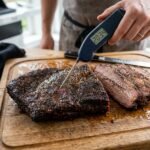
If you pick up both at the store and look at them side by side, you’ll actually see the difference. Chuck looks more marbled and may have visible fat pockets. Shoulder looks more uniform, more meaty, and a deeper red color. Using a reliable meat thermometer becomes especially important with shoulder roast since there’s less fat to forgive overcooking.
Flavor Profile — How Do They Actually Taste?
Both cuts deliver that deep, beefy flavor you want from a roast. But the experience isn’t identical.
Chuck roast tastes richer. All that melted fat and collagen gives it an almost buttery quality when it’s cooked properly. The flavor is robust, and the texture becomes incredibly soft — the kind of meat where you barely need a fork. The braising liquid from a chuck roast is also typically more flavorful because the rendered fat carries so much taste into the sauce or gravy.
Shoulder roast has a cleaner, more “meaty” flavor. Without as much fat masking the beef taste, you get a more straightforward, honest beefy flavor. Some people actually prefer this — it doesn’t feel as heavy on the palate. The texture, when done right, is tender but with a bit more chew and structure compared to chuck’s melt-in-your-mouth quality.
Neither flavor is “better.” It really comes down to what you’re in the mood for and what dish you’re making. A hearty winter stew where you want the meat to dissolve into the sauce? Chuck wins. A Sunday roast where you’re slicing neat pieces and serving them alongside gravy and vegetables? Shoulder holds its own beautifully.
Best Cooking Methods for Each Cut
Here’s where choosing the right cut for the right recipe makes or breaks your meal.
Chuck Roast — Born for Braising
Chuck roast was practically designed for low-and-slow cooking methods that give all that collagen time to break down.
Pot roast is the classic application. Brown the chuck on all sides in a Dutch oven, add broth, vegetables, and aromatics, then let it cook at around 300°F for 3 to 4 hours. The result is fall-apart meat swimming in a rich, savory sauce.
Beef stew is another natural fit. Cube the chuck, sear the pieces, and slow cook them in liquid. The fat renders out and thickens the stew naturally. Bonus: chuck holds up to long simmering times without turning mushy — it just gets more tender. If you’re cooking on the stovetop, understanding the right simmer temperature can make a real difference in your final result.
Shredded beef for tacos, sandwiches, or nachos works incredibly well with chuck. After braising, you can literally pull it apart with two forks.
Smoking is another option that’s gained popularity. Low and slow on the smoker, chuck roast turns into something that rivals brisket — seriously. If you enjoy smoking beef, the approach is similar to smoking brisket at 225°F, just with a shorter cook time since chuck roasts are typically smaller.
Shoulder Roast — The Slicer’s Cut
Shoulder roast also benefits from slow cooking, but its leaner profile makes it more versatile than you might expect.
Oven roasting works well for shoulder. Season it generously, sear the outside, then roast in a covered pan with some liquid at 325°F. The key is keeping moisture in the cooking environment so the lean meat doesn’t dry out. A meat thermometer is non-negotiable here — pull it when the internal temperature hits around 195°F to 205°F for a tender roast.
Slow cooker/crockpot is actually ideal for shoulder roast because the sealed environment traps all the steam and keeps the lean meat moist. Add broth, onions, garlic, and some root vegetables, then let it go on low for 8 to 10 hours.
Deli-style roast beef is where shoulder really shines. Because it holds its shape, you can roast it to your desired doneness, let it rest, and slice it thin for sandwiches. Chuck can’t do this nearly as well — it would just fall apart. For understanding how doneness levels work with beef, that reference applies to roasts too.
Pressure cooking (Instant Pot) is a great shortcut for shoulder roast. The high-pressure environment forces moisture into the lean meat and breaks down connective tissue in a fraction of the time — about 60 to 90 minutes versus 8 hours in a slow cooker.
Price and Availability — What’s Easier on Your Wallet?
Let’s talk money, because this matters to most of us.
Chuck roast is usually cheaper. It’s one of the most common, widely available beef cuts in any grocery store. Because there’s more chuck on each animal (it’s a large primal cut), supply is high and prices stay reasonable. As of 2025, you’ll typically find chuck roast between $5 and $8 per pound depending on your region and whether you’re buying Choice or Select grade.
Shoulder roast falls in a similar price range but can sometimes cost a dollar or two more per pound. It’s slightly less common at regular grocery stores, and you might need to ask the butcher specifically for it or look for it under its alternate names (arm roast, cross-rib roast, English roast).
Pro Tip: If you’re feeding a crowd on a budget, chuck is almost always the smarter buy. You get more flavor per dollar thanks to the higher fat content, and it stretches beautifully in stews, tacos, and sandwiches. A 3-pound chuck roast can easily feed 6 to 8 people when shredded into a stew. For planning portions on large cuts, the same logic applies as calculating brisket per person.
Nutritional Comparison — Does It Matter?
If you’re watching your macros or just curious about what you’re eating, there’s a real difference here.
Shoulder roast is the leaner option. A 3-ounce cooked serving of shoulder roast has roughly 150 to 170 calories, with about 7 to 9 grams of fat and 22 to 25 grams of protein. It’s a solid choice if you want a protein-heavy meal without a ton of saturated fat.
Chuck roast is fattier. That same 3-ounce serving comes in around 200 to 230 calories, with 12 to 16 grams of fat and 20 to 23 grams of protein. The extra calories come almost entirely from fat.
Does this mean shoulder is “healthier”? Not necessarily. Fat carries flavor and helps you feel full. If you’re eating a reasonable portion as part of a balanced meal, either cut is perfectly fine. But if you’re specifically looking to reduce your fat intake, shoulder is the obvious pick.
Both cuts are excellent sources of iron, zinc, B12, and other nutrients that beef is known for. The nutritional gap really only matters if you’re tracking macros closely.
Shoulder Roast Vs Chuck Roast — Choosing by Recipe
This is what it all comes down to: what are you making?
Go with chuck roast if you’re cooking: classic pot roast, beef stew, shredded beef tacos or burritos, beef chili, smoked “poor man’s brisket,” Mississippi pot roast, or any dish where the meat needs to fall apart and meld with a sauce.
Go with shoulder roast if you’re cooking: sliced roast beef dinner, deli-style sandwich meat, cold roast beef for salads, beef and vegetable one-pot meals where you want intact meat pieces, or any recipe where presentation matters and you need clean slices.
Either cut works for: slow cooker meals, pressure cooker recipes, Sunday dinner roasts (just adjust your expectations on texture), and Italian beef sandwiches.
Here’s a real-world scenario. Let’s say it’s a Sunday afternoon, and you want dinner ready by 6 PM. You’ve got a Dutch oven and some Yukon Gold potatoes. If you want that cozy, falling-apart pot roast experience, grab a chuck. If you want to carve neat slices at the table and serve them with gravy, grab a shoulder roast. Same cooking time, same oven, totally different dinner experience.
Common Mistakes People Make with Both Cuts
Even experienced cooks trip up with these roasts. Here are the biggest pitfalls.
Not giving enough time. Both cuts have connective tissue that needs hours of low, slow heat to break down. Rushing the cook by cranking the oven temperature will give you tough, chewy meat every single time. For chuck, you need at least 3 hours at 300°F to 325°F. For shoulder, plan on a similar time or longer since it’s leaner and the collagen takes more coaxing.
Skipping the sear. Browning the outside of your roast before braising isn’t optional — it’s what builds that deep, caramelized flavor base. Heat your Dutch oven or skillet until it’s screaming hot, add a tablespoon of oil, and sear each side for 2 to 3 minutes. Don’t move the meat around. Let it develop a dark crust.
Not adding enough liquid for shoulder roast. Because shoulder is lean, it needs more external moisture. Chuck can almost get away with minimal liquid since it renders its own fat. Shoulder needs you to compensate. Add at least a cup of broth, and keep the lid on tight.
Cutting too soon. Let your roast rest for 15 to 20 minutes after cooking. This lets the juices redistribute. Cut into it immediately and all that moisture runs out onto the cutting board instead of staying in the meat. The same principle applies whether you’re slicing a brisket or carving a roast — patience pays off.
Using the wrong cut for the wrong dish. This is the most common mistake. People buy shoulder roast expecting it to fall apart like pot roast, and it doesn’t. Or they buy chuck for sliced roast beef and can’t get clean cuts because the meat shreds. Match the cut to the cooking method, and you’ll avoid disappointment.
Can You Substitute One for the Other?
Yes, but with caveats.
You can absolutely use shoulder roast in a pot roast recipe that calls for chuck. It’ll work. But you’ll need to add more liquid, cook it a bit longer, and accept that the texture will be slightly firmer and less “melt in your mouth.” The flavor will still be great.
Going the other direction — using chuck in a recipe that calls for shoulder — is trickier. If the recipe wants you to slice the meat neatly, chuck will frustrate you because it’ll want to fall apart. But if you don’t care about presentation and just want flavor? Chuck will actually taste richer in that same recipe.
The substitution also works when you’re comparing similar cuts across different animals. Just like you’d consider the differences between shank and butt portions of a ham, understanding the structure of the cut helps you adapt your technique.
A good rule of thumb: substitute freely for shredded or stewed applications. Be more careful when slicing is involved.
FAQ
Is shoulder roast tougher than chuck roast?
Not exactly tougher, but it is leaner and denser. With the right cooking method (low and slow with plenty of moisture), shoulder roast gets perfectly tender. The difference is that it holds together and slices, while chuck falls apart. If you cook shoulder too fast or without enough liquid, it can turn out dry and seem tougher, but that’s a technique problem, not a cut problem.
Can I smoke a shoulder roast like a chuck roast?
You can, but expect different results. Smoked chuck roast is often called “poor man’s brisket” because its fat content creates a juicy, bark-covered result similar to smoked brisket. Shoulder roast on the smoker will be leaner and firmer. If you go this route, consider wrapping the shoulder in butcher paper partway through the cook to retain moisture — similar to the approach used when wrapping brisket at the right temperature. Also, keep a spray bottle of apple juice or broth nearby and spritz every 45 minutes.
Which is better for a slow cooker — shoulder or chuck?
Both work beautifully in a slow cooker. Chuck will give you richer, more fall-apart results with less effort. Shoulder needs a bit more liquid added to the pot but rewards you with cleaner slices and a leaner finished dish. If you’re making pulled beef or shredded beef, go with chuck. If you want to serve sliced roast from the slow cooker, shoulder is the better pick.
Are there other names for these cuts I should know?
Yes, and this is where it gets confusing at the meat counter. Chuck roast may be labeled as: chuck eye roast, blade roast, 7-bone roast, or simply “pot roast.” Shoulder roast may appear as: arm roast, cross-rib roast, shoulder clod roast, or English roast. When in doubt, ask your butcher to show you where on the animal the cut comes from — that tells you more than any label.
What internal temperature should I cook these roasts to?
For a braised, fall-apart texture (either cut), you want an internal temperature of 195°F to 205°F. At this range, the collagen has fully broken down and the meat is spoon-tender. If you’re roasting shoulder to a “sliceable” medium doneness, pull it earlier — around 145°F to 155°F — and let it rest. Always use an accurate meat thermometer. Getting the right internal temperature on beef is the single most reliable way to get consistent results.
So, Which One Should You Buy Tonight?
It depends entirely on what’s for dinner.
If you want rich, fatty, fall-apart comfort food — the kind of pot roast that makes your whole house smell incredible — chuck roast is your cut. It’s forgiving, affordable, and practically cooks itself once you give it time and heat.
If you want a leaner roast that slices beautifully, works well for meal prep, and gives you that clean beefy flavor without all the fat — shoulder roast is the move. Just show it a little extra love with moisture and patience.
There’s no wrong answer here. Both cuts deliver satisfying, deeply flavorful beef when treated right. The only real mistake is buying one and expecting it to behave like the other. Know your cut, match it to your recipe, and you’ll nail it every time.