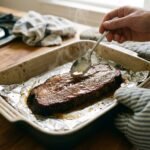
For decades, families overcooked pork chops because they were told the meat needed to hit 160°F to be safe. The result? Dry, tough, shoe-leather chops that nobody really enjoyed. Then in 2011, the USDA changed its recommendation — and a lot of home cooks still don’t know about it.
The internal temperature of a pork chop that the USDA now recommends is 145°F (63°C), followed by a 3-minute rest. That single update changed the game for pork lovers everywhere. But hitting that number isn’t quite as straightforward as just sticking a thermometer in and calling it done. Thickness matters. Cooking method matters. Where you place that thermometer probe matters too.
If you’ve ever sliced into a pork chop only to find it either pink and questionable or gray and bone-dry, this guide is for you. Let’s talk about how to nail that perfect temperature — whether you’re grilling, pan-searing, baking, or smoking your chops.
Why Internal Temperature Matters More Than Time
Here’s a truth that a lot of recipes won’t tell you upfront: cooking time is a terrible indicator of doneness for pork chops.
Think about it. A thin, boneless chop from the grocery store might be half an inch thick. A thick-cut bone-in chop from the butcher could be almost two inches. Telling both of those to cook for “6-8 minutes per side” is like telling a sedan and an SUV to use the same amount of gas for a road trip. It just doesn’t work.
The only reliable way to know your pork chop is done — safely cooked but still juicy — is by checking the internal temperature. A good instant-read meat thermometer takes the guesswork out entirely.
If you’re not confident using one yet, check out our guide on how to read a meat thermometer — it’s simpler than you think.
Pro Tip: Invest in a digital instant-read thermometer rather than the old dial type. They give you a reading in 2-3 seconds and are accurate within 1°F. You can find a solid one for under $15 — it’s the single best kitchen tool you’ll ever buy.
The Safe Internal Temperature for Pork Chops: 145°F
Let’s get the most important number out of the way. The USDA updated its guidelines in 2011 and set the minimum safe internal temperature for whole-cut pork (including chops, roasts, and tenderloin) at 145°F (63°C), followed by a 3-minute rest period.
Before that update, the recommendation was 160°F — and that’s the number many people still have stuck in their heads. At 160°F, most of the moisture has already been squeezed out of the meat. The result is dry, tough pork that needs a river of applesauce to choke down.
At 145°F with a proper rest, the pork is completely safe to eat. The rest period is key because during those 3 minutes, the temperature continues to rise a few degrees through carryover cooking, and any remaining bacteria are eliminated.
Quick Fact: The old 160°F recommendation was largely driven by fear of trichinosis, a parasitic infection. But trichinella is actually killed at 137°F. Modern farming practices have also virtually eliminated trichinosis in commercially raised pork in the United States. The risk, statistically, is near zero.
One thing to be clear about — this 145°F guideline is for whole muscle cuts like chops, roasts, and tenderloins. Ground pork is a different story. Ground meat needs to reach 160°F because bacteria can get mixed throughout during grinding. If you’re curious about ground meat safety, our article on when pork sausage is fully cooked breaks that down.
Pork Chop Doneness Levels Explained
Not everyone wants their pork chop at exactly the same doneness, and that’s perfectly fine. Just like steak has a doneness spectrum, pork chops do too — though the range is narrower since you still want to stay at or above 145°F for safety.
Here’s how different temperatures affect your pork chop:
Medium-Rare (145°F): This is the USDA minimum. The center will have a blush of pink, and the meat will be noticeably juicy and tender. Some people feel uneasy seeing pink in pork, but at this temperature with a 3-minute rest, it’s completely safe. The pink color is caused by myoglobin (a protein in muscle), not undercooking.
Medium (150°F): A great middle ground. The pink fades to a very faint blush, and the texture is still moist and pleasant. Many chefs and pork producers actually recommend this temperature as the sweet spot — safe enough to ease any worries, juicy enough to actually enjoy.
Medium-Well (155°F): Minimal pink, slightly firmer texture. Still acceptable, but you’re starting to lose moisture here. If your chop is thin-cut, this temp can push it toward dryness.
Well-Done (160°F+): No pink at all. The meat is firm, and the juice level drops significantly. Some people genuinely prefer this — and that’s okay — but it does require more careful cooking to avoid toughness. Brining or marinating beforehand helps a lot at this doneness level.
Did You Know? If you’re someone who just can’t handle the idea of pink in your pork, that’s a personal preference — not a safety issue. But try pulling your chop at 150°F instead of 160°F. You’ll notice a dramatic difference in juiciness, and there’s virtually no pink visible at 150°F.
The difference between a juicy pork chop and a dry one often comes down to just 5-10 degrees. That’s why a thermometer isn’t optional — it’s essential.
How to Check Internal Temperature Correctly
You might be thinking, “I just stick the thermometer in — what’s there to know?” Actually, where and how you probe the meat makes a real difference in your reading.
Insert the thermometer into the thickest part of the chop. This is where the meat takes the longest to cook, so it’s the most accurate spot to check. If you have a bone-in chop, angle the probe so it reaches the center of the thickest section without touching the bone.
Why avoid the bone? Because bone conducts heat differently than meat. If your probe touches the bone, you might get a falsely high reading and pull the chop too early — or a falsely low one depending on the situation.
For thin chops (under ¾ inch), you may need to insert the thermometer from the side, going horizontally into the meat rather than from the top down. This ensures the sensor tip is actually inside the meat and not poking through to the pan below.
Warning: Don’t rely on the “poke test” or cutting into the chop to check doneness. Cutting releases juices that you want to stay inside the meat. And the poke test — pressing the meat to judge firmness — is unreliable even for experienced cooks. It’s a party trick, not a cooking method.
Take one reading from each chop if you’re cooking multiple pieces. They won’t all finish at the same time, especially if they’re different sizes.
Carryover Cooking: Why You Should Pull Early
Here’s something that separates confident home cooks from stressed ones: understanding carryover cooking.
After you take a pork chop off the heat, its internal temperature doesn’t stop climbing immediately. The exterior of the meat is much hotter than the interior, and that heat continues to move inward even after the chop is on your cutting board.
For pork chops, you can expect the internal temperature to rise by 3-5°F during the rest period. For thicker bone-in chops, it might climb even more — up to 7°F in some cases.
So if you want your finished chop at 145°F, pull it off the heat at around 140-142°F. If you’re targeting 150°F, pull at 145°F. You get the idea.
This same principle applies to any protein. If you’ve ever cooked a tri-tip or flank steak, the carryover concept works exactly the same way.
The 3-minute rest isn’t just for safety — it also lets the muscle fibers relax and reabsorb some of the juices that were pushed toward the surface during cooking. Cut into the chop immediately and those juices run out onto your plate. Wait 3-5 minutes and they stay in the meat where they belong.
Best Cooking Methods and Temperature Tips for Each
Different cooking methods affect how quickly and evenly your pork chop reaches that target temperature. Let’s go through the main ones.
Pan-Searing
Pan-searing is ideal for boneless chops or thinner bone-in cuts. Heat a skillet (cast iron works beautifully) over medium-high heat with a tablespoon of oil. Sear each side for 3-4 minutes until you get a golden-brown crust, then reduce the heat to medium and continue cooking until the internal temp reaches 140°F.
The key mistake people make here is cranking the heat too high the entire time. That gives you a burnt exterior and raw center. Start hot for the crust, then back off so the heat can work its way inward.
Grilling
Grilling is where pork chops really shine. Set up your grill for two-zone cooking — direct high heat on one side, indirect lower heat on the other. Sear the chop over direct heat for 2-3 minutes per side, then move it to the indirect zone to finish cooking gently.
Check the temperature after about 5 minutes on the indirect side. You’re looking for 140°F before pulling it off.
For thick-cut chops (1.5 inches or more), you might need 8-10 minutes on the indirect side. Don’t rush it. Low and slow on the finishing side keeps the juices locked in.
Baking / Oven-Roasting
Set your oven to 400°F. A lot of people bake pork chops at 350°F, and it works — but 400°F gives you a better exterior texture without drying out the inside, especially if you sear first.
The best approach: sear on the stovetop for 2 minutes per side, then transfer the skillet directly into the 400°F oven. Bake for 8-12 minutes (depending on thickness) until the internal temp hits 140°F.
If you’re doing a sheet-pan dinner with vegetables, this method is perfect. The chops cook alongside your sides, and everything finishes around the same time.
Smoking
Smoking pork chops gives them an incredible flavor layer. Set your smoker to 225-250°F and place the chops on the grates. With smoke cooking, bone-in chops that are at least 1 inch thick work best — thin chops dry out too quickly in the low-and-slow environment.
Smoke until the internal temperature reaches 140°F, which typically takes 45-60 minutes depending on the thickness and your smoker’s behavior. If you want a bark-like exterior, you can finish them with a quick sear on a hot grill or skillet for 30-60 seconds per side.
If you’re into smoking meats, you might enjoy our guides on smoking pork shoulder at 275 or pulling pork at the right internal temp.
Bone-In vs. Boneless: Does It Change the Temperature?
The short answer is no — the safe internal temperature is 145°F regardless of whether there’s a bone or not. But the bone does affect how you cook.
Bone-in pork chops take longer to cook than boneless ones of the same thickness. The bone acts as an insulator, slowing down heat transfer to the meat immediately surrounding it. That’s actually a good thing because it means the meat near the bone stays juicier for longer while the rest of the chop cooks.
Boneless chops cook more evenly but are also more prone to overcooking — there’s no bone acting as a buffer. You need to be more vigilant with your thermometer on boneless cuts.
From a flavor standpoint, bone-in chops generally taste better. The bone and surrounding connective tissue contribute flavor and moisture during cooking. Ask any chef, and they’ll tell you bone-in is the way to go for pork chops.
Thickness Makes All the Difference
Let’s talk about something that most pork chop recipes completely ignore: how thick your chop actually is.
A ½-inch boneless chop from the grocery store cooks in about 6-8 minutes total. It goes from raw to overcooked in a blink. You almost need to babysit it with the thermometer. These thin chops are tricky — they’re easy to overcook and hard to get a good sear on without blowing past your target temp.
A 1-inch bone-in chop is the sweet spot for most home cooks. It gives you enough time to develop a proper crust while keeping the inside juicy. Total cook time is usually 12-15 minutes, depending on the method.
A 1.5 to 2-inch chop is restaurant-quality thickness. These are forgiving and much easier to nail the right temperature with. They need reverse-searing or a two-zone approach — low heat first to bring the internal temp up gradually, then a hard sear at the end for color and crust.
Pro Tip: If your grocery store only has thin-cut chops and you keep drying them out, ask the butcher counter to cut them thicker. Most stores will do this for free if they have bone-in loins in the back. A 1.25-inch chop is a total game-changer compared to those shrink-wrapped thin ones.
Brining and Marinating: Insurance Against Overcooking
Even if you slightly overshoot your target temperature, a brined pork chop will still be noticeably more moist than one that went straight from the package to the pan.
A basic brine is simple: dissolve ¼ cup of salt in 4 cups of water, submerge the chops, and refrigerate for 30 minutes to 2 hours. That’s it. The salt changes the protein structure of the meat, allowing it to hold onto more moisture during cooking.
You can add flavor to the brine too — brown sugar, garlic cloves, peppercorns, fresh herbs, apple cider vinegar. These won’t penetrate deeply into the meat, but they’ll season the outer layers nicely.
If you don’t have time to brine, even a generous salting 30-45 minutes before cooking helps. Sprinkle kosher salt on both sides and let the chops sit uncovered on a wire rack in the fridge. The salt draws out moisture initially, then the meat reabsorbs it along with the salt. This is called dry brining, and it’s the lazy cook’s secret weapon.
What About Pink Pork? Is It Really Safe?
This is probably the number one question people ask about pork chop doneness: why is my pork still pink if it’s cooked to temperature?
Pink pork at 145°F is perfectly safe. The color of cooked meat depends on several factors beyond temperature — the pH of the meat, the specific myoglobin content, even the cooking method used. Smoked pork chops, for example, will often have a pinkish “smoke ring” near the surface that has nothing to do with doneness.
Trust the thermometer, not the color. A pork chop can look pink at 145°F and be completely safe. It can also look white at 140°F and technically be undercooked. Color is misleading — temperature isn’t.
If the idea of pink pork makes you uncomfortable, we’ve got a deeper exploration in our article about whether pink pork tenderloin is safe to eat. Spoiler: it is, as long as the temperature is right.
Common Pork Chop Temperature Mistakes (And How to Fix Them)
Mistake #1: Not preheating the pan or grill. If you put a pork chop on a cold or lukewarm surface, it’ll stick, cook unevenly, and won’t develop any crust. Always preheat. You should hear a strong sizzle when the chop hits the surface. No sizzle = not hot enough.
Mistake #2: Checking temperature too early and too often. Every time you open the grill lid or lift the chop to probe it, you’re disrupting the cooking process. Wait until you’re at least 70% of the way through the expected cook time before checking. If you’re using an oven or smoker, a leave-in probe thermometer solves this entirely.
Mistake #3: Cooking chops straight from the fridge. Cold meat + hot pan = uneven cooking. The exterior overcooks before the center catches up. Pull your chops out of the fridge 20-30 minutes before cooking so they come closer to room temperature. This isn’t about food safety risk (30 minutes on the counter is fine) — it’s about even cooking.
Mistake #4: Skipping the rest period. You’ve cooked the chop to 143°F, it looks perfect, and you’re hungry. So you cut it immediately and watch the juices flood your plate. Please — just wait 3-5 minutes. Set a timer if you need to. The rest period is as important as the cooking itself.
Mistake #5: Using the wrong chop for the cooking method. Thin boneless chops aren’t great for smoking. Thick bone-in chops aren’t ideal for a quick weeknight stir-fry. Match your chop to your method, and you’ll have far better results.
A Quick Reference Temperature Table
Here’s a simple breakdown to keep handy:
| Doneness | Pull Temperature | Final Temp (After Rest) | Appearance |
|---|---|---|---|
| Medium-Rare | 140°F | 145°F | Pink center, very juicy |
| Medium | 145°F | 150°F | Faint pink, moist |
| Medium-Well | 150°F | 155°F | Barely pink, slightly firm |
| Well-Done | 155°F | 160°F+ | No pink, firm |
Remember — the “pull temperature” is when you take the chop off the heat. The final temperature is what it reaches after resting for 3-5 minutes.
FAQ
Can pork chops be a little pink inside?
Yes, absolutely. At 145°F with a 3-minute rest, pork chops are safe to eat even with a pink tint in the center. The pink color comes from myoglobin in the muscle and doesn’t indicate the meat is raw. Trust your thermometer reading over the visual color.
How long does it take to cook a pork chop to 145°F?
It depends entirely on thickness, cooking method, and whether the chop is bone-in or boneless. A 1-inch boneless chop takes roughly 10-12 minutes when pan-seared over medium-high heat. A 1.5-inch bone-in chop on the grill might need 14-18 minutes total. The thermometer is the only reliable way to know for sure — not a timer.
What happens if I overcook my pork chop past 160°F?
The meat will be safe to eat but noticeably drier and tougher. Past 160°F, the muscle fibers have contracted significantly and squeezed out most of their moisture. If this happens, slicing the chop thin and adding a sauce or pan gravy can help rescue it. For next time, consider brining and using a thermometer to pull the chop at the right moment.
Is 145°F safe for all types of pork?
For whole muscle cuts like chops, roasts, and tenderloin — yes, 145°F with a 3-minute rest is the USDA recommendation. Ground pork products like sausage, burgers, or meatloaf need to reach 160°F because grinding can distribute bacteria throughout the meat. Our meatloaf internal temperature guide explains this in more detail.
Do I need an expensive thermometer?
Not at all. A basic digital instant-read thermometer for $10-$15 works perfectly for checking pork chop temperatures. The ThermoWorks ThermoPop and the Taylor digital thermometer are both solid, affordable options. The important thing is that you’re using one — any functioning thermometer beats no thermometer.
Your Pork Chops Deserve Better
The difference between a forgettable pork chop and one that makes people ask for your recipe comes down to roughly 10-15 degrees on a thermometer. That’s it. You don’t need fancy equipment, professional training, or a $200 cut of meat. You need a thermometer, a target temperature of 145°F, and the patience to let the chop rest for a few minutes after cooking.
Start with a thick-cut, bone-in chop. Brine it for an hour if you have the time. Cook it with whatever method you’re most comfortable with. Pull it off the heat at 140°F. Rest it for 5 minutes. Then slice in and see the difference for yourself.
Once you’ve tasted a properly temped pork chop, you’ll never go back to the overcooked version. And honestly? Your family won’t let you.